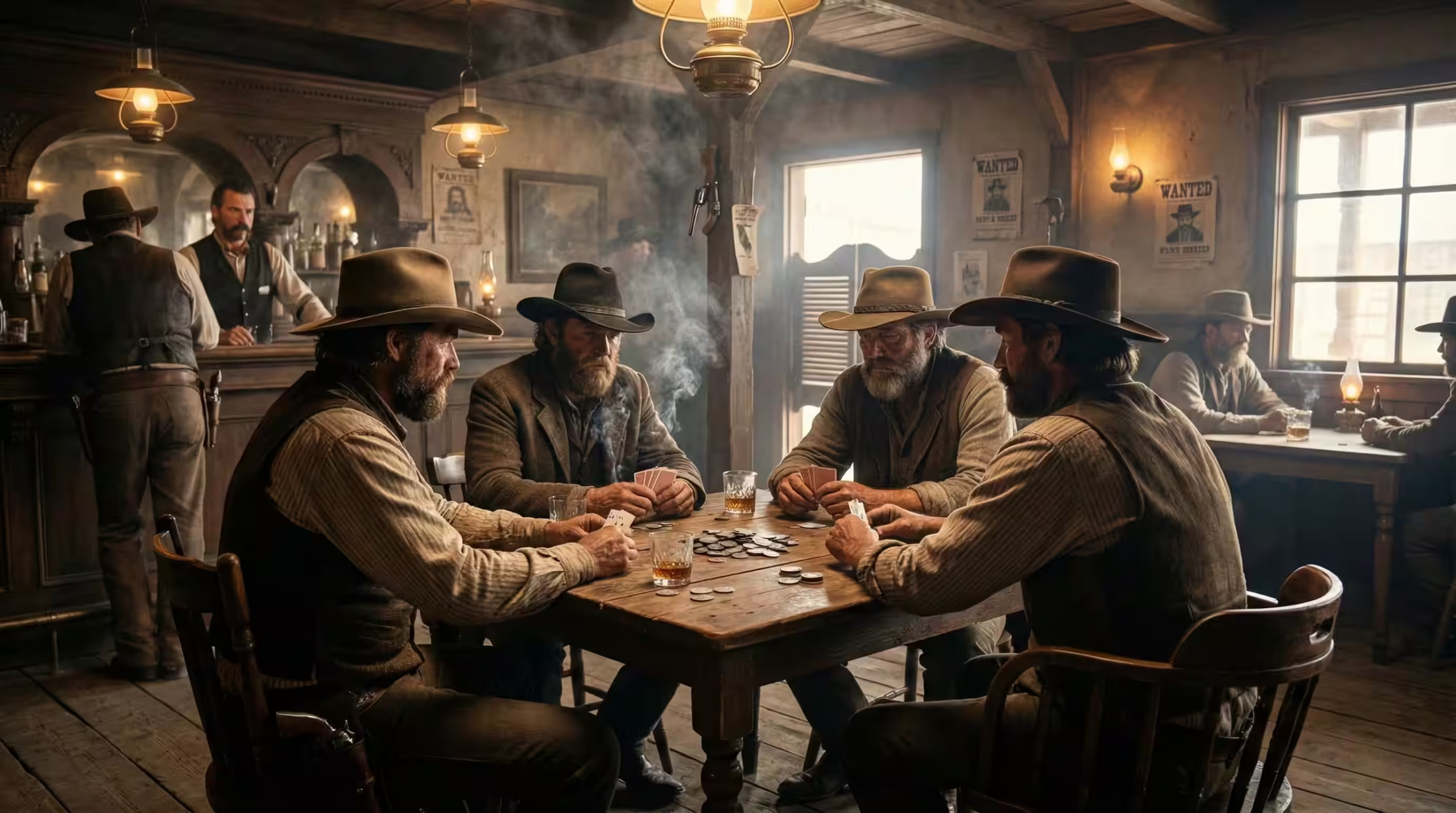
Poker Variants Before Texas Hold’em: What Players Played Before the Poker Boom

oker Variants Before Texas Hold'em What Players Played Before the Poker Boom | Bluffing Monkeys

Texas Hold’em dominates modern poker.

If you walk into a casino, open a poker app, or turn on a televised tournament, Hold’em is the default game. But it wasn’t always that way.

Before the poker boom-and long before solvers and 在线平台 -players were grinding completely different formats.

If you want to understand how poker evolved (and why certain strategic concepts exist today), you need to look at the games that shaped it.

Here are the most important poker variants that defined the game before Texas Hold’em took over.

1. Five-Card Draw (The Original Home Game King)

Before Hold’em, Five-Card Draw was the most common poker game in America.

It was simple:

  • Each player receives five cards face down
  • One betting round
  • Players discard and draw new cards
  • Final betting round
  • 摊牌

No community cards. No board texture. No shared information.

Why It Was Popular

  • Easy to learn
  • Perfect for home games
  • Fast structure
  • Minimal complexity

It was featured in countless Western films and backyard games.

Strategic Differences
Five-Card Draw is more about:

  • Hand strength
  • Opponent tendencies
  • Reading drawing patterns

Bluffing exists-but without community cards, range analysis is narrower and more psychology-driven. Before televised poker, this was the mainstream game.

2. Seven-Card Stud (The Pre-Hold’em Casino Standard)

Before the poker boom, if you walked into a major casino, the main game wasn’t Hold’em. It was Seven-Card Stud.

Basic Structure

  • Players receive two cards face down, one face up
  • Betting round
  • Three more face-up cards with betting rounds
  • Final face-down card
  • Final betting round

No community cards. Everyone builds their own hand.

Why Stud Dominated
Stud:

  • Rewards memory and observation
  • Allows players to see partial information
  • Has deep strategic layers

Before online poker, Stud was widely considered the “serious” poker game. Many legends of the pre-boom era built reputations in Stud, not Hold’em.

Strategic Focus
Stud emphasizes:

  • Board awareness
  • Dead cards (cards already folded or visible)
  • Card removal effects
  • Positional betting advantage

Unlike Hold’em, there’s no shared board. That changes everything about hand reading.

3. Five-Card Stud (Early Saloon Poker)

Even earlier than Seven-Card Stud was Five-Card Stud. This was common in 19th-century saloons.

Structure

  • One card face down
  • Four cards face up
  • Betting round after each card

You could literally see most of your opponent’s hand develop.

Bluffing in Five-Card Stud required boldness because:

  • Information was public
  • Weak boards were exposed

It was a direct, aggressive format-and helped build poker’s reputation as a psychological battle.

4. Razz (Lowball Stud)

Razz is essentially Seven-Card Stud-but the lowest hand wins.

Best possible hand:
A-2-3-4-5 (no pairs)

Why It Mattered
Lowball formats forced players to:

  • Re-evaluate hand strength
  • Think about reverse equity
  • Pay attention to visible dead cards

之前 Hold’em tournaments dominated the scene, mixed games and Stud variations were common in serious poker rooms. Razz required discipline and sharp reading skills-qualities still relevant today.

5. Omaha (The Quiet Alternative)

Omaha existed before the poker boom, but it wasn’t mainstream.

Structure:

  • Four hole cards
  • 五张公共卡
  • Must use exactly two hole cards

Compared to Hold’em:

  • More draws
  • Bigger pots
  • Closer equities

It remained niche until online poker expanded format diversity. But Omaha was always present in certain regions and high-stakes circles.

6. Lowball (Deuce-to-Seven & Ace-to-Five)

Lowball formats were widely played in California and parts of the U.S.

Two Major Variants

Ace-to-Five Lowball

  • Aces are low
  • Straights and flushes don’t count against you

Deuce-to-Seven (2-7) Lowball

  • Aces are high
  • Straights and flushes count against you
  • 7-5-4-3-2 is best

These games required hand reading discipline, punished loose play, and emphasized draw logic. Many elite players of earlier eras specialized in these formats.

Why Texas Hold'em Took Over | Bluffing Monkeys

Why Texas Hold’em Took Over

If so many variants existed, why did Hold’em dominate? Three reasons:

1. Spectator-Friendly

With community cards:

  • Everyone can see the drama
  • Bluffing is easier to follow
  • Strategy is visual

That made it perfect for television.

2. Balanced Complexity

Hold’em:

  • Is easy to learn
  • Hard to master
  • Scales well to tournaments

It sits in a strategic sweet spot.

3. Tournament Structure

Hold’em fits tournament formats perfectly:

  • Clear hand progression
  • Clean betting rounds
  • Dramatic all-ins

什么时候 televised tournaments exploded in the early 2000s, Hold’em became the global standard.

What Modern Players Can Learn From Older Variants

Stud and Draw games emphasize skills modern players often neglect:

Memory & Observation
Stud forces you to track visible cards. That sharpens awareness.

Hand Reading Without a Shared Board
Draw games rely more on opponent behavior than board texture.

学科
Lowball formats punish impatience. Understanding older variants builds deeper poker fundamentals.

The Shift From Psychology to Math

Early poker culture leaned heavily on:

  • Physical tells
  • 心理战
  • Intimidation

Modern poker-especially post-boom-leans more on:

But the core skills from older games still matter: Patience, Observation, and Emotional control. Poker evolved-but it didn’t erase its roots.


最后的思考

Before Texas Hold’em ruled casinos and online platforms, poker was a collection of diverse formats.

  • Five-Card Draw ruled home games.
  • Seven-Card Stud dominated casinos.
  • Lowball and Razz tested discipline.
  • Omaha quietly built momentum.

Texas Hold’em didn’t replace these games because it was better. It replaced them because it was spectator-friendly, structurally balanced, and perfect for tournaments.

Understanding pre-boom poker variants gives you context-and sharper fundamentals. Because no matter the format, poker still rewards discipline, logic, and structured aggression.

The game changed. The principles didn’t.

BluffingMonkeys ,我们不仅仅分享扑克策略、评论和指南。我们帮助玩家与最佳游戏、最新更新和最大机会保持联系。请务必关注我们所有的社交媒体频道,这样您就不会错过重要的公告、奖金、促销活动、特别活动和新优惠。继续探索我们的内容,当您准备好加入行动时,请使用我们主页上的实时聊天按钮与我们联系或发送消息 @bluffingmonkeys24_7 在 Telegram 应用上。

虚张声势的猴子支持

在线

您好,今天我能为您提供什么帮助?