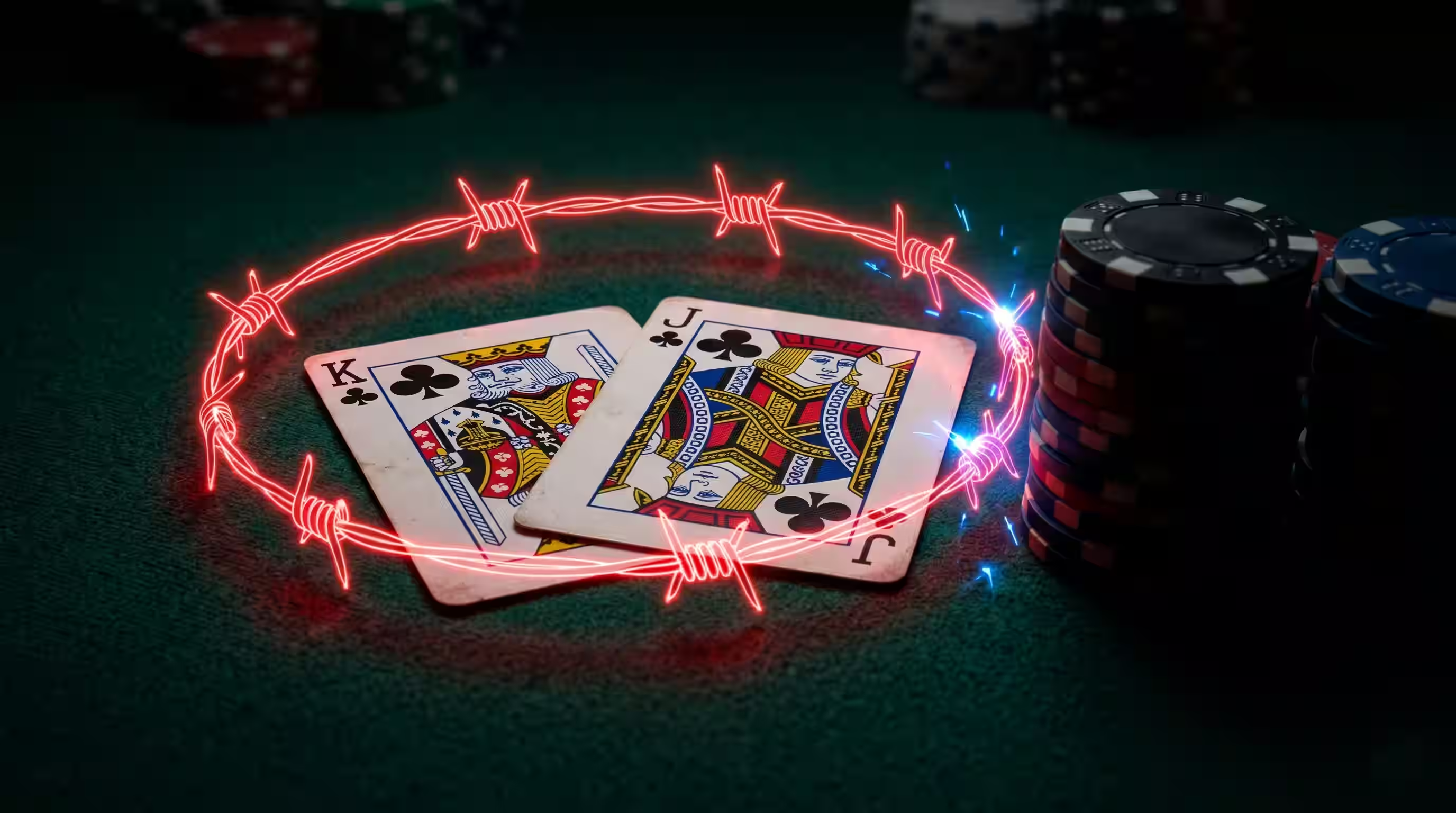
Big Blind Defense Strategy: How to Defend Without Bleeding Chips

Big blind defense strategy is one of the most important skills in poker because the big blind is the seat where players are forced to fight the most often.

You already have money in the pot. You are getting a discount. You close the action preflop in many spots. So calling can feel natural.

That is exactly why so many players defend badly.

Good big blind defense is not about refusing to fold because you are getting a price. It is about knowing which hands can realize equity, which hands become traps, and how position, sizing, ranges, and board texture change the value of every defend.

That is the real difference.

Weak players defend because the call looks cheap. Strong players defend because the hand has a profitable plan.

Why the Big Blind Is So Different

The big blind is unique because you are already invested before seeing your cards.

That changes the math.

When someone raises, you often need to call less than a player in another position because your blind is already in the pot. That discount is real, and it is one reason big blind defense ranges are wider than many other calling ranges.

But the discount creates a trap.

A cheaper call is not automatically a profitable call.

You still have to play the rest of the hand out of position most of the time. That means your hand needs enough equity, playability, and postflop potential to survive more than just the preflop price.

The Biggest Big Blind Defense Mistake

The biggest mistake is defending too wide with hands that cannot realize equity well.

Players look at the pot odds and think, “I only need a little equity.”

That is incomplete.

You do not just need raw equity. You need equity you can actually realize after the flop.

A hand may look close preflop, but if it constantly makes weak pairs, dominated draws, or awkward bluff-catchers out of position, it can still lose money over time.

这就是为什么 扑克中的底池赔率 matter, but they are not the whole decision. Pot odds tell you the price. Strategy tells you whether the hand can do anything useful with that price.

Big Blind Defense Starts with Raise Size

One of the easiest ways to improve immediately is to pay more attention to the open size.

Defending against a min-raise is not the same as defending against a 3x or 4x open.

The larger the raise, the tighter your defense should usually become because the price gets worse and your out-of-position disadvantage becomes more expensive.

This is where many players get lazy.

They defend the same hands against every size because they think in hand names instead of prices and ranges. That is a leak.

A hand like 9♠ 7♠ may be a reasonable continue against a small button open in some games. The same hand can become a clear fold against a larger raise from an earlier position.

Position of the Opener Changes Everything

Big blind defense is not only about your hand.

It is about who opened.

A cutoff open, a button open, and an under-the-gun open do not represent the same range.

When early position opens, their range is usually stronger. That means your dominated hands perform worse, your weak broadways become more dangerous, and your low-equity continues lose value.

When the button opens, the range is wider. That means the big blind can defend more hands because the opener has more weak and steal-heavy holdings.

这就是为什么 poker ranges matter so much. You are not defending against one hand. You are defending against the opener’s whole range.

Why Suited Hands Defend Better Than Offsuit Trash

Suited hands usually defend better because they have more ways to make strong or semi-strong outcomes.

They can make flushes, backdoor flush draws, and more playable equity on many flops.

But this does not mean every suited hand is good.

Weak suited kings, bad suited queens, and low suited junk can still create dominated flushes and second-best hands. Suitedness helps, but it does not rescue every bad hand.

The goal is not to defend every hand with a suit.

The goal is to defend hands that can realize equity and avoid reverse-implied-odds problems.

Broadway Hands Can Be Traps from the Big Blind

Hands like KJo, QTo, KTo, and QJo look playable because they can make top pair.

But top pair is not always good news.

Against strong opening ranges, these hands can be dominated. You call preflop, hit a king or queen, and still find yourself against a better kicker or stronger range.

That is one of the most expensive big blind leaks.

Players think they are defending a reasonable hand, but they are really entering a dominated top-pair situation out of position.

That is why big blind defense strategy requires more than asking whether your hand looks familiar.

Suited Connectors Need the Right Conditions

Suited Connectors Need the Right Conditions

Suited connectors can defend well from the big blind in the right spots.

But they are not automatic calls.

They work better when:

  • the raise size is small
  • stacks are deep enough
  • the opener’s range is wide
  • your hand can make strong draws or hidden value
  • you are not likely to face heavy squeeze pressure behind

Even then, you need discipline.

A hand like 8♠ 7♠ can be valuable on some textures and worthless on others. This is exactly why suited connectors in poker need position, stack depth, and board texture to work together.

Do Not Defend Just Because You Are Bored

This sounds simple, but it matters.

The big blind is where boredom becomes expensive.

You fold for several hands, finally see something semi-playable, and convince yourself the price is good enough. The problem is that this decision repeats constantly. One loose defend does not feel like much. Hundreds of loose defends become a serious leak.

Strong players do not need to win every blind.

They need to lose less from the blinds than everyone else.

Big Blind Defense Against Button Opens

This is the most common defense spot and one of the most important.

Button ranges are wide, so the big blind usually gets to defend more hands than against other positions. But that does not mean you defend randomly.

Against button opens, you should think about:

  • open size
  • button opening frequency
  • postflop aggression
  • whether the button over-c-bets
  • how well your hand can continue on common flops

If the button opens too wide and gives up too often, you can defend more and fight postflop. If the button opens wide but barrels aggressively, you need hands that can withstand pressure better.

Big Blind Defense Against Early Position Opens

This is where players need more discipline.

Early position opens are stronger. That means dominated hands become worse, weak suited hands become more dangerous, and speculative hands need better conditions.

You should not defend against early position the same way you defend against the button.

That one adjustment alone can fix a lot of leaks.

If the opener is tight and the raise size is large, many hands that look barely playable should simply be folded.

When to 3-Bet from the Big Blind

Calling is not your only defense.

Sometimes 3-betting is better.

A good big blind 3-bet can:

  • punish wide opens
  • create fold equity
  • stop opponents from stealing too freely
  • build value with premium hands
  • avoid playing a passive pot out of position

But 3-betting badly creates bigger problems than calling badly.

You need value hands and selected bluffs that make sense. Good bluff candidates often have blockers, suitedness, or playability if called. Random aggression is not a strategy.

这就是为什么 3-bet底池策略 matters. If you 3-bet from the big blind, you must know how the hand plays after the flop, not just how the preflop raise looks.

Postflop: The Big Blind Has More Board Coverage

One reason the big blind can defend fairly wide is that it often has more board coverage than the preflop raiser.

On low connected boards, paired boards, and some messy textures, the big blind can have many hands the opener does not always have at full frequency.

For example, boards like:

  • 8♠ 7♦ 6♣
  • 6♥ 5♥ 4♠
  • 9♣ 9♦ 5♠

can interact well with a big blind defending range.

That does not mean you auto-attack every low board. It means you should understand that some boards belong less to the preflop raiser than they look.

这就是为什么 牌面纹理在扑克中 is so important. Big blind defense is not finished preflop. It continues through how your range connects with the flop.

Do Not Overfold to Small C-Bets

One of the most common big blind leaks is folding too much to small continuation bets.

If you defend preflop and then fold every time the raiser makes a small c-bet, your preflop defense becomes too weak.

Small bets usually offer a good price, and your range often contains enough pairs, backdoors, gutters, ace-highs, and floats to continue selectively.

That does not mean call everything.

It means do not defend preflop with hands that instantly collapse against normal pressure.

This connects directly to 持续下注策略 . Understanding why opponents c-bet small helps you defend better against those bets.

Check-Raising from the Big Blind

The big blind is one of the best seats for check-raising because you often defend hands that connect strongly with boards the opener may not fully control.

A strong check-raise range can include:

  • sets
  • two pair
  • strong top pair on certain boards
  • combo draws
  • strong straight or flush draws

The key is balance between value and hands with real equity.

Bad players check-raise because they are annoyed. Good players check-raise because the board, ranges, and fold equity support it.

If you want the deeper version, this guide on check-raise strategy explains why the move works when it is built properly.

Turn Play Is Where Big Blind Defense Gets Tested

Many players defend preflop reasonably, continue flop reasonably, then collapse on the turn.

The turn is where your range gets more defined.

You need to know which hands keep calling, which hands become raises, which hands turn into bluffs, and which hands must finally fold.

If you call flop with every backdoor and weak pair but have no turn plan, your big blind defense will leak money.

这正是为什么 转牌打法是扑克中最被忽视的街道 . Big blind defense is not about surviving one street. It is about having a plan for the whole hand.

Population Reads Matter in Big Blind Defense

Your defense should change by pool.

If players over-c-bet and give up turns, you can float more flops and attack later. If players under-bluff turns and rivers, you should stop paying off too lightly. If players steal too wide from late position, your 3-betting and defending ranges can expand.

这就是为什么 在线扑克中的玩家群体解读 are so useful. Big blind defense is one of the clearest places where pool tendencies create real money decisions.

Use Tools to Study Big Blind Defense

Big blind leaks are hard to feel because they happen in small pieces.

You call one hand too wide. Fold one flop too easily. Overcall one turn. Miss one profitable check-raise. None of it feels huge in isolation.

That is why study matters.

扑克范围分析器 can help you compare how big blind defending ranges interact with different flop textures.

范围与范围净值计算器 is useful when you want to test whether your defended hand or range actually has enough equity against the opener’s range.

And if you want to track whether blind defense is damaging your results over time, the 扑克对局追踪器 can help you review patterns instead of relying on memory.

The Biggest Big Blind Defense Mistakes

  • Defending the same range against every open size: bigger raises require tighter defense.
  • Ignoring opener position: button opens and under-the-gun opens are not the same.
  • Calling dominated offsuit hands: weak top pairs can become expensive.
  • Overfolding to small c-bets: this makes your preflop defense too weak.
  • 没有转牌计划: flop calls need future-street logic.
  • Never 3-betting enough: some opponents steal too wide and deserve pressure.

How to Improve Your Big Blind Defense Right Away

  • Defend wider versus smaller late-position opens: but only with hands that realize equity well.
  • Tighten up versus early position: stronger ranges punish dominated hands.
  • Watch raise size carefully: price changes everything.
  • Stop overvaluing weak offsuit broadways: they often create dominated top pairs.
  • Continue more intelligently versus small c-bets: do not fold your range too quickly.
  • Study your blind results: the big blind is supposed to lose some money, but not as much as most players donate.

如果你只记住一件事

Big blind defense strategy is not about defending because you already posted a blind. It is about defending hands that can realize equity, continue on enough boards, and avoid becoming dominated traps out of position.

That is the core idea.

The big blind will never be an easy seat.

But if you defend with better structure, respect raise size and opener position, and stop treating every discount like a gift, you can stop bleeding chips from one of the most important seats in poker.

FAQ: Big Blind Defense Strategy

What is big blind defense strategy?

Big blind defense strategy is the process of deciding which hands to call, 3-bet, or fold after posting the big blind and facing a raise.

Why can you defend wider from the big blind?

You can defend wider because you already have money invested and often close the action preflop, giving you a better price to call than other positions.

Should you defend every suited hand from the big blind?

No. Suited hands can perform better than offsuit hands, but weak suited hands can still make dominated flushes and poor postflop decisions.

How does raise size affect big blind defense?

The larger the open raise, the tighter your big blind defense should usually become because your price is worse and mistakes cost more.

What is the biggest big blind defense mistake?

The biggest mistake is calling too many hands just because the price looks cheap, without considering equity realization, domination, position, and postflop playability.

虚张声势的猴子 ,我们不仅仅分享扑克策略、评论和指南。我们帮助玩家与最佳游戏、最新更新和最大机会保持联系。请务必关注我们所有的社交媒体频道,这样您就不会错过重要的公告、奖金、促销活动、特别活动和新优惠。继续探索我们的内容,当您准备好加入行动时,请使用我们主页上的实时聊天按钮与我们联系或发送消息 @bluffingmonkeys24_7 在 Telegram 应用上。

虚张声势的猴子支持

在线

您好,今天我能为您提供什么帮助?