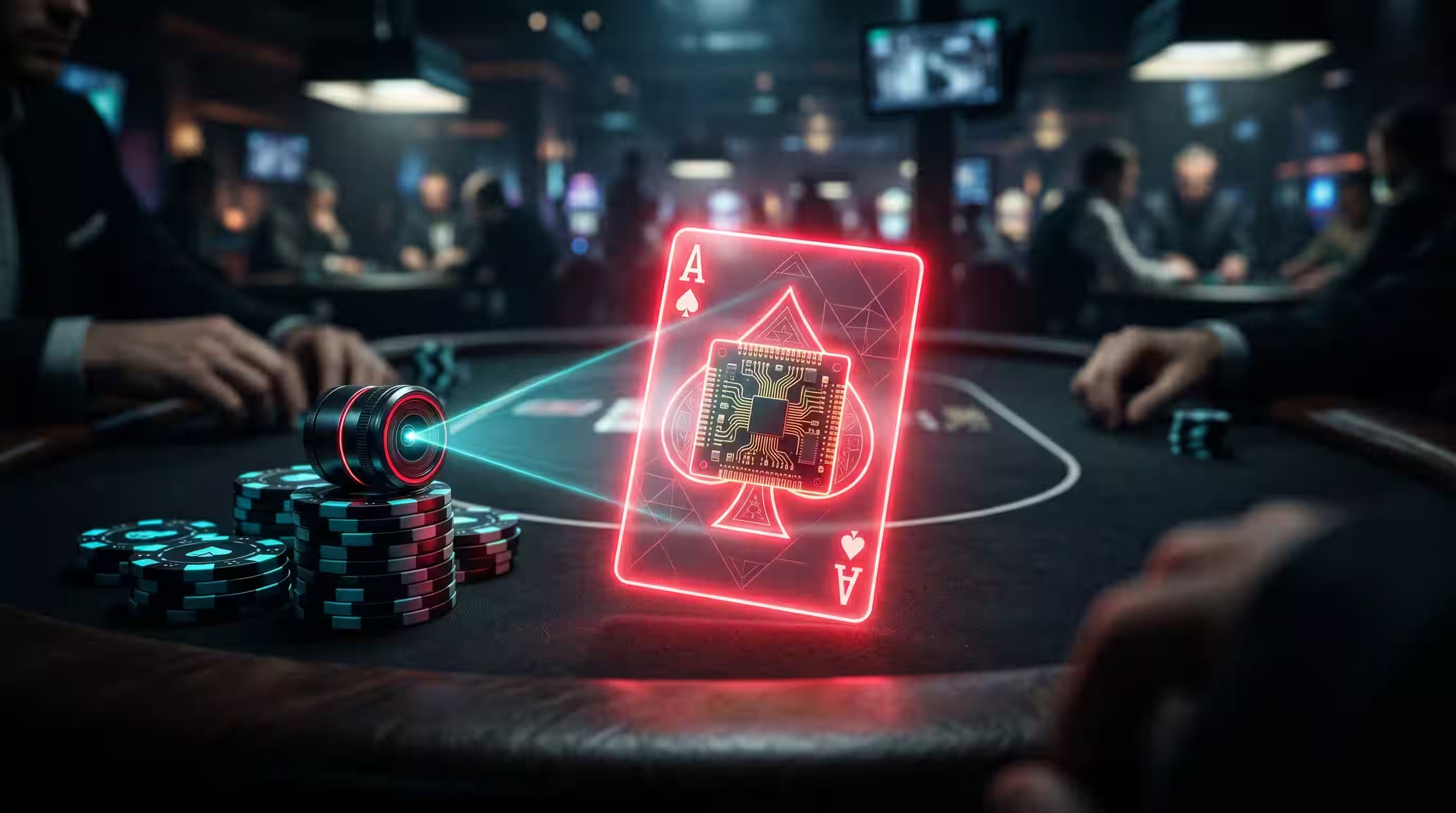
Trapaça no Poker ao Vivo tornou-se um dos temas de maior desconfiança no pôquer moderno.
Por anos, a maioria dos jogadores pensava que trapaça era principalmente um problema de pôquer online: bots, assistência em tempo real, multi-contas, ghosting, conluio e software suspeito.
Mas o pôquer ao vivo tem seu próprio problema de confiança moderno agora.
Jogos de apostas altas são transmitidos. As cartas são lidas por sistemas RFID. Jogadores trazem celulares, fones de ouvido, smartwatches, bolsas, carregadores e dispositivos pessoais perto da mesa. Prêmios enormes são assistidos por milhares de espectadores online. Uma única mão estranha pode se tornar uma controvérsia global da noite para o dia.
O novo debate sobre trapaça no pôquer ao vivo não é apenas sobre cartas marcadas ou mecânicas da velha guarda. É sobre tecnologia, segurança de transmissão ao vivo, acesso à informação, confiança do jogador e se as salas de pôquer estão preparadas para um mundo onde pequenos dispositivos podem criar enormes suspeitas.
Este guia explica por que a trapaça no pôquer ao vivo é um tópico tão importante em 2026, como o pôquer transmitido ao vivo mudou a conversa sobre segurança, o que os jogadores devem entender sobre cartas RFID e preocupações com câmeras ocultas, e por que o futuro do pôquer ao vivo depende de protocolos de confiança mais fortes.
Por que a Trapaça no Pôquer ao Vivo Está em Alta Novamente
A trapaça no pôquer ao vivo está em alta porque o jogo está mais visível do que nunca.
No passado, comportamentos suspeitos em um jogo particular poderiam ficar restritos à sala. Um fold estranho, um call perfeito ou uma sessão de vitória impossível poderiam gerar rumores, mas a história geralmente permanecia local.
Isso mudou com o pôquer transmitido ao vivo.
Agora, os espectadores podem rever todas as mãos. Analistas podem dissecar decisões. Twitter, Reddit, YouTube, Discord e fóruns de pôquer podem examinar linguagem corporal, tamanho das apostas, tempo, uso de celular, posição do assento e procedimentos de segurança.
Essa visibilidade é boa para o pôquer porque gera entretenimento e transparência.
Mas isso também cria um novo problema.
Quando algo parece estranho, todo o mundo do pôquer pode virar investigador, juiz, júri e comentarista em poucas horas.
Trapaças à moda antiga vs. Trapaças modernas no pôquer
A trapaça no pôquer não é nova.
Trapaças à moda antiga incluíam cartas marcadas, conluio, descarte de fichas, embaralhamento falso, distribuição por baixo, baralhos frios, tiro de ângulo e jogadores compartilhando informações.
A trapaça moderna é diferente porque a tecnologia muda o que é possível.
| Tipo de Trapaça | Versão Old-School | Versão Moderna |
|---|---|---|
| Informações das cartas | Cartas marcadas ou espiadas | Vazamentos de RFID, câmeras escondidas, preocupações com dispositivos |
| Comunicação | Sinais com as mãos ou conversa na mesa | Celulares, fones de ouvido, dispositivos inteligentes, aplicativos de mensagens |
| Conluio | Parceiros fazendo soft-play ou armando jogadas | Estratégia coordenada entre grupos ao vivo e online |
| Manipulação do jogo | Mecânica do dealer | Tecnologia, salas de transmissão, acesso a equipamentos |
| Ciclo de suspeita | Rumores locais | Clipes virais e investigações públicas |
A principal diferença é a velocidade.
A tecnologia pode criar suspeitas mais rápido, e as redes sociais espalham essas suspeitas ainda mais rápido.
Por que o Pôquer Transmitido ao Vivo Mudou Tudo
O pôquer transmitido ao vivo tornou o jogo mais emocionante para os fãs.
Os espectadores podem ver as cartas escondidas, acompanhar grandes potes, ver as reações dos jogadores e entender a estratégia em tempo real ou quase real. As transmissões ajudaram a tornar os cash games, high rollers, jogos privados e mesas finais mais divertidos.
Mas as transmissões ao vivo também criaram um desafio de segurança.
Para mostrar as cartas fechadas aos espectadores, a produção deve capturar as informações das cartas de alguma forma. Isso geralmente significa cartas RFID, sistemas gráficos, atrasos na transmissão, salas de produção, comentaristas, equipe técnica e controles de acesso.
Isso gera uma pergunta simples:
Quem pode ver as cartas, quando podem vê-las e como essas informações são protegidas?
Se os jogadores não confiarem na resposta, o jogo perde credibilidade.
O que são cartas de pôquer RFID?
Cartas de pôquer RFID são cartas que podem ser lidas por sistemas eletrônicos para que uma transmissão ao vivo possa exibir as cartas fechadas de cada jogador para o público.
Eles são úteis porque tornam o pôquer mais assistível.
Sem gráficos de cartas ocultas, muitas transmissões de pôquer seriam chatas ou difíceis de acompanhar. Os espectadores querem saber quem está blefando, quem está armando uma cilada, quem fez um call heróico e como a mão se desenvolveu.
A tecnologia RFID ajuda a criar essa experiência.
Mas qualquer tecnologia que leia informações privadas das cartas precisa ser protegida com muito cuidado.
O problema não é que o RFID seja inseguro por natureza.
O problema é que informações privadas existem em algum lugar na cadeia de produção. Isso significa que acesso, atrasos, controles de pessoal, hardware, software e auditoria são importantes.
O Problema Central: Vazamento de Informações
A maioria das preocupações modernas com trapaça no pôquer ao vivo se resume a uma coisa:
vazamento de informações.
Se um jogador de alguma forma descobre as cartas de outro, o jogo perde o sentido.
Se alguém de fora da mesa souber as cartas e puder comunicar essa informação a um jogador, o jogo está comprometido.
Se um sistema de produção revela informações cedo demais ou para muitas pessoas, a confiança é abalada.
Se os jogadores acreditarem que informações podem estar vazando, mesmo sem provas, o jogo ainda pode sofrer.
O pôquer é baseado em informações ocultas.
Uma vez que essa informação oculta se torna disponível para a pessoa errada, a estratégia não importa mais da mesma forma.
Câmeras Escondidas e o Novo Problema de Dispositivos
Um motivo pelo qual a segurança do pôquer ao vivo é mais difícil em 2026 é que dispositivos pequenos estão melhores do que nunca.
Celulares, canetas, carregadores, fones de ouvido, relógios, óculos, bolsas e outros objetos comuns podem levantar suspeitas se os jogadores acharem que eles podem ser usados para capturar ou transmitir informações.
Isso não significa que todo celular seja um dispositivo de fraude.
Isso significa que as salas de pôquer devem pensar mais seriamente sobre as regras de dispositivos.
Em jogos de apostas altas, até mesmo um objeto suspeito perto da mesa pode criar grandes problemas de confiança.
O problema não é apenas se a trapaça acontece.
O problema é se o ambiente faz a trapaça parecer possível.
Por que os Celulares na Mesa São um Risco de Segurança
Celulares são normais na vida moderna.
Mas em uma mesa de pôquer, especialmente em um jogo transmitido de altas apostas, os telefones criam vários problemas.
- Eles podem distrair os jogadores.
- Eles podem ser usados para comunicação.
- Eles podem ser usados para ver streams se os atrasos não forem fortes o suficiente.
- Eles podem criar suspeitas mesmo quando usados inocentemente.
- Eles podem deixar outros jogadores desconfortáveis.
É por isso que regras mais rígidas para celulares fazem sentido em muitos ambientes de pôquer ao vivo.
Um jogo normal de cash game de baixo risco pode não precisar das mesmas regras que um pote de US$ 500.000 transmitido.
Mas quanto maiores as apostas e quanto mais informações existirem em um sistema de produção, mais rigorosa deve ser a política do dispositivo.
Fones de ouvido, Smartwatches e Óculos de Mesa
Fones de ouvido e smartwatches são outra questão sensível.
Um jogador pode usar fones de ouvido inocentemente para ouvir música.
Um jogador pode usar um smartwatch sem pensar nisso.
Mas em um jogo sério transmitido ao vivo, a aparência importa.
Se os jogadores estão preocupados com comunicação externa, dispositivos de áudio visíveis criam suspeitas desnecessárias. Mesmo que nada de errado esteja acontecendo, o ambiente parece menos limpo.
É por isso que alguns jogos devem considerar uma regra simples:
Sem dispositivos de comunicação ativos na mesa durante jogos transmitidos ou de apostas altas.
Isso protege todo mundo.
Isso protege os jogadores da suspeita.
Isso protege o jogo de controvérsias.
E isso evita que a transmissão vire um debate sobre segurança em vez de entretenimento.
A Diferença Entre Suspeita e Prova
Esta é uma das partes mais importantes da conversa sobre trapaça no pôquer ao vivo.
Uma jogada estranha não é prova de trapaça.
Uma chamada ruim que ganha não é prova de trapaça.
Um jogador com aparência nervosa não é prova de trapaça.
Um jogador usando um telefone não é prova automática de trapaça.
O pôquer cria mãos estranhas o tempo todo. Jogadores recreativos tomam decisões estranhas. Profissionais às vezes se enganam. As pessoas leem mãos incorretamente. Jogadores ruins fazem boas jogadas por motivos ruins. Jogadores bons fazem jogadas ruins por motivos complexos.
É por isso que as acusações devem ser tratadas com cuidado.
O pôquer precisa de segurança, mas também precisa de justiça para com os jogadores acusados.
O padrão certo não é a indignação nas redes sociais.
O padrão certo é evidência, investigação, procedimento e transparência.
Por que as Acusações de Trapaça Podem Prejudicar o Pôquer Mesmo Sem Provas
Acusações de trapaça são poderosas porque o poker depende da confiança.
Se os jogadores acreditarem que um jogo não é limpo, eles param de jogar.
Se os espectadores acharem que as transmissões foram comprometidas, eles param de assistir.
Se os patrocinadores acreditam que os escândalos não são gerenciados, eles ficam cautelosos.
Se os jogadores recreativos acreditarem que profissionais ou insiders têm vantagens ocultas, eles perdem a confiança.
É por isso que as salas de pôquer devem tratar a segurança como parte do produto.
Bons jogos não são apenas sobre ação.
Bons jogos são sobre confiança.
As Perguntas de Segurança Que Todo Jogo de Pôquer Transmitido Deveria Responder
Qualquer jogo de pôquer sério transmitido ao vivo deve ser capaz de responder a perguntas básicas de segurança.
- Quem tem acesso às informações das cartas escondidas?
- Qual é o atraso da transmissão?
- Os jogadores podem usar celulares durante as mãos?
- Fones de ouvido ou dispositivos inteligentes são permitidos?
- Quem controla o sistema RFID?
- A sala de produção está separada dos jogadores e convidados?
- Funcionários são verificados e monitorados?
- Mãos incomuns são revisadas internamente?
- Os jogadores podem solicitar esclarecimentos de segurança?
- O que acontece se um comportamento suspeito for reportado?
O objetivo não é paranoia.
O objetivo é a clareza.
Os jogadores não deveriam ter que adivinhar se um jogo é seguro.
Atraso na Transmissão Não É Opcional
Um atraso de transmissão adequado é uma das proteções mais simples para o pôquer transmitido ao vivo.
Se as cartas ocultas são mostradas para quem assiste em tempo real, o risco fica óbvio. Alguém poderia potencialmente passar essa informação para um jogador.
Um atraso forte reduz esse risco.
Mas o atraso sozinho não é suficiente.
Se alguém na sala de produção tiver acesso em tempo real às cartas fechadas e puder se comunicar com um jogador, o atraso não resolve o problema principal.
Isso significa que o pôquer transmitido precisa de ambos:
- transmissão pública com atraso
- controle de acesso interno rigoroso
Um sem o outro é incompleto.
Por que o Acesso da Equipe é Importante
Os jogadores geralmente focam apenas nos outros jogadores.
Mas no pôquer transmitido, o acesso da equipe também importa.
Thelpers, equipe de salão, equipe de produção, comentaristas, operadores de câmera, operadores gráficos, equipe de segurança e convidados podem estar perto de informações confidenciais, dependendo da estrutura.
Isso não significa que a equipe não é confiável.
Isso significa que os sistemas profissionais devem limitar o acesso desnecessário.
Quanto menos pessoas puderem ver informações privadas de cartas, melhor.
Quanto menos pessoas perto da sala de produção durante mãos ao vivo, melhor.
Quanto mais claras as regras sobre celulares e comunicação, melhor.
Segurança não é sobre acusar todo mundo.
Segurança é sobre reduzir pontos fracos.
Como os Cassinos Podem Proteger Jogos de Poker ao Vivo
Cassinos e salas de pôquer podem aumentar a confiança com regras práticas.
- Use atrasos de transmissão fortes para todas as transmissões de cartas escondidas.
- Limite o acesso à sala de produção apenas à equipe essencial.
- Proiba celulares, fones de ouvido e dispositivos inteligentes durante mãos transmitidas de altas apostas.
- Mantenha objetos pessoais longe do feltro, sempre que possível.
- Use regras claras para pausas e comunicação dos jogadores.
- Audite sistemas de RFID e procedimentos de manuseio de cartas.
- Rotacione baralhos e equipamentos sob condições controladas.
- Documente os procedimentos de segurança antes do início do jogo.
- Crie um processo claro para reportar preocupações.
- Comunique os resultados com cuidado se uma investigação ocorrer.
Essas regras podem parecer rígidas.
Mas regras rígidas são mais fáceis do que reparar a confiança após um escândalo.
Como os Jogadores Podem se Proteger
Os jogadores não podem controlar todas as partes de uma sala de pôquer.
Mas eles podem fazer escolhas mais inteligentes.
Antes de entrar em um jogo ao vivo transmitido ou particular, pergunte:
- Quem comanda o jogo?
- A sala é confiável?
- As regras são claras?
- Dispositivos são permitidos na mesa?
- Existe um atraso na transmissão?
- Quem pode ver as informações das cartas fechadas?
- Os outros jogadores estão confortáveis com a configuração?
- O que acontece se houver uma disputa?
Se as respostas forem vagas, tome cuidado.
Um bom jogo não deve exigir confiança cega.
Por que Jogos Privados Precisam de Cautela Extra
Jogos de pôquer privados podem ser ótimos.
Eles podem oferecer mais ação, lineups mais fáceis, ambientes sociais e potes maiores do que jogos públicos.
Mas jogos privados também exigem confiança.
Em um cassino, existem regras formais, sistemas de vigilância, equipe de jogos e uma estrutura regulatória. Em jogos particulares, a qualidade da segurança depende muito do anfitrião e do ambiente.
É por isso que jogos privados de altas apostas devem ter muito cuidado com:
- integridade do dealer
- controle de baralho
- dispositivos dos jogadores
- segurança de pagamento
- acesso de convidados
- regras de câmera
- gerenciamento de disputas
A ação é inútil se a confiança for fraca.
Por que os jogadores de pôquer online devem se importar com a segurança do pôquer ao vivo
Pôquer online e ao vivo estão conectados.
Quando uma controvérsia de trapaça ao vivo se torna viral, isso afeta a forma como as pessoas pensam sobre pôquer em geral.
Um fã casual pode não diferenciar pôquer ao vivo, pôquer online, ClubGG, PokerBros, cash games transmitidos e sites regulamentados. Ele pode simplesmente pensar:
“O pôquer pode não ser seguro.”
That is bad for everyone.
A confiança em uma parte do pôquer apoia a confiança em todo o ecossistema.
É por isso também que nossos guias sobre Bots de Poker e RTA, Treinamento de AI pokere O Poker Online é Manipulado? conecte-se naturalmente com este tópico.
Os formatos são diferentes, mas a questão da confiança é a mesma.
Trapaça no Pôquer ao Vivo e Pôquer de Altas Apostas
O pôquer de altas apostas aumenta o problema de segurança.
Quando o pote é pequeno, a suspeita pode permanecer pequena.
Quando o pote vale centenas de milhares de dólares, cada detalhe importa.
Um telefone na lateral importa.
Um pedido de assento incomum importa.
Uma questão de acesso à sala de produção é importante.
Um atraso ou dispositivo inexplicável importa.
Jogadores de altas apostas têm razão em exigir condições limpas. O dinheiro é muito alto e o risco reputacional é muito grande.
Se você está acompanhando o crescimento do pôquer de elite, leia nosso High Stakes Poker 2026 guiar.
Como o Medo de Trapaça Muda a Estratégia
O medo de trapaça pode afetar as decisões dos jogadores, mesmo quando nenhuma trapaça está acontecendo.
Se um jogador ficar desconfiado, ele pode parar de tomar decisões estratégicas normais. Ele pode desistir demais, pagar demais, sair do jogo, confrontar alguém emocionalmente ou jogar pior porque está distraído.
Essa é outra razão pela qual regras claras são importantes.
Os jogadores devem pensar em ranges, posição, tamanho das apostas e pot odds — não se o carregador de celular de alguém é suspeito.
Para jogadores sérios, o foco mental faz parte da taxa de vitórias.
Se o ambiente do jogo destrói o foco, o jogo não é bom.
Use o Medidor de Tilt de Poker se você quiser rastrear se emoções, suspeitas ou frustrações estão afetando seu jogo.
O Papel da Mídia de Pôquer
A mídia de pôquer tem um trabalho difícil quando ocorrem controvérsias de trapaça.
Se a mídia ignorar preocupações sérias, os jogadores perdem a confiança.
Se a mídia espalha acusações sem provas, reputações podem ser destruídas injustamente.
A melhor cobertura de pôquer deve separar:
- fatos confirmados
- declarações do jogador
- resultados da investigação
- especulação da comunidade
- recomendações de segurança
This distinction matters.
O pôquer precisa de transparência, mas também precisa de precisão.
Por que “Parece Estranho” Não é Suficiente
Muitas mãos de pôquer parecem estranhas.
Um jogador recreativo pode ligar porque está curioso.
Um profissional pode fazer uma aposta de valor fino que parece estranha para iniciantes.
Um jogador cansado pode ler mal o board.
Um jogador nervoso pode agir de forma antinatural porque as câmeras estão sobre ele.
Um jogador pode tomar uma decisão terrível e ser recompensado pelo baralho.
Isso é poker.
Portanto, “parece estranho” deve iniciar uma pergunta, não encerrar a conversa.
A abordagem correta é:
- documentar a preocupação
- revisar as evidências
- verificar procedimentos
- evitar certeza pública sem provas
- deixe os investigadores fazerem o trabalho deles
Isso protege tanto o jogo quanto os jogadores.
Como é uma Boa Cultura de Segurança no Pôquer
Uma forte cultura de segurança no pôquer não é construída após um escândalo.
É construído antes de um.
Boas salas de poker criam hábitos que dificultam a trapaça e facilitam a investigação de acusações.
Isso inclui:
- regras claras de dispositivos
- aplicação consistente
- equipe treinada
- vigilância forte
- acesso controlado à produção
- atrasos transparentes na transmissão
- procedimentos documentados
- canais de denúncia respeitosos
A melhor segurança é monótona.
Se tudo estiver claro, limpo e consistente, o jogo pode continuar focado no pôquer.
O que o Poker Baseado em Clubes Pode Aprender com a Segurança ao Vivo
Aplicativos de pôquer baseados em clubes e comunidades privadas de pôquer podem aprender com debates sobre segurança de pôquer ao vivo.
A lição não é apenas sobre câmeras ou cartões RFID.
A lição é que os jogadores precisam de confiança no ambiente.
Para ClubGG, PokerBros e outros ecossistemas de clubes privados, a confiança depende de:
- regras claras do clube
- reliable support
- estruturas transparentes
- fontes de tráfego conhecidas
- boa comunicação
- seleção responsável de jogos
Se você está comparando ambientes de pôquer privados, comece com o Bluffing Monkeys lista de clubes.
Você também pode ler nossos guias sobre Onde Jogar no ClubGG e Onde Jogar no PokerBros.
Por que este tópico pode ter um bom ranking para buscas de pôquer
Este artigo visa um forte e emocional cluster de busca de pôquer:
- Trapaça no Poker ao Vivo
- poker cheating
- segurança de transmissão ao vivo de pôquer
- Cartas de poker RFID
- fraude no poker com câmera oculta
- segurança no pôquer
- trapaça em pôquer de altas apostas
- trapaça em pôquer transmitido
- o pôquer ao vivo é seguro
- integridade do pôquer
O tema é forte porque combina notícias, polêmica, tecnologia, segurança dos jogadores e a cultura do poker.
Também se conecta naturalmente com conteúdo existente sobre integridade do pôquer online, ferramentas de IA para pôquer, bots de pôquer, pôquer de altas apostas, clubes privados e seleção responsável de jogos.
Veredito Final: Poker Precisa de Mais Confiança, Não Mais Paranoia
A trapaça no pôquer ao vivo é um tópico sério, mas a resposta não é paranoia.
A resposta é uma arquitetura de confiança melhor.
Os jogadores não devem precisar ficar imaginando quem pode ver suas cartas. Os espectadores não devem precisar questionar cada mão estranha. Os jogos transmitidos não devem depender de promessas vagas. Jogos de apostas altas não devem permitir hábitos casuais com dispositivos que criem suspeitas desnecessárias.
O futuro do pôquer ao vivo depende de regras de segurança claras, protocolos de transmissão fortes, tecnologia controlada e manuseio cuidadoso de acusações.
O poker sempre terá mãos estranhas.
O pôquer sempre terá jogadas ruins que acabam vencendo.
O poker sempre terá jogadores que parecem suspeitos por razões que não têm nada a ver com trapaça.
Mas o jogo deve fazer todo o possível para proteger a única coisa que mais importa:
confiança.
Porque quando a confiança desaparece, até o melhor jogo de pôquer do mundo se torna injogável.