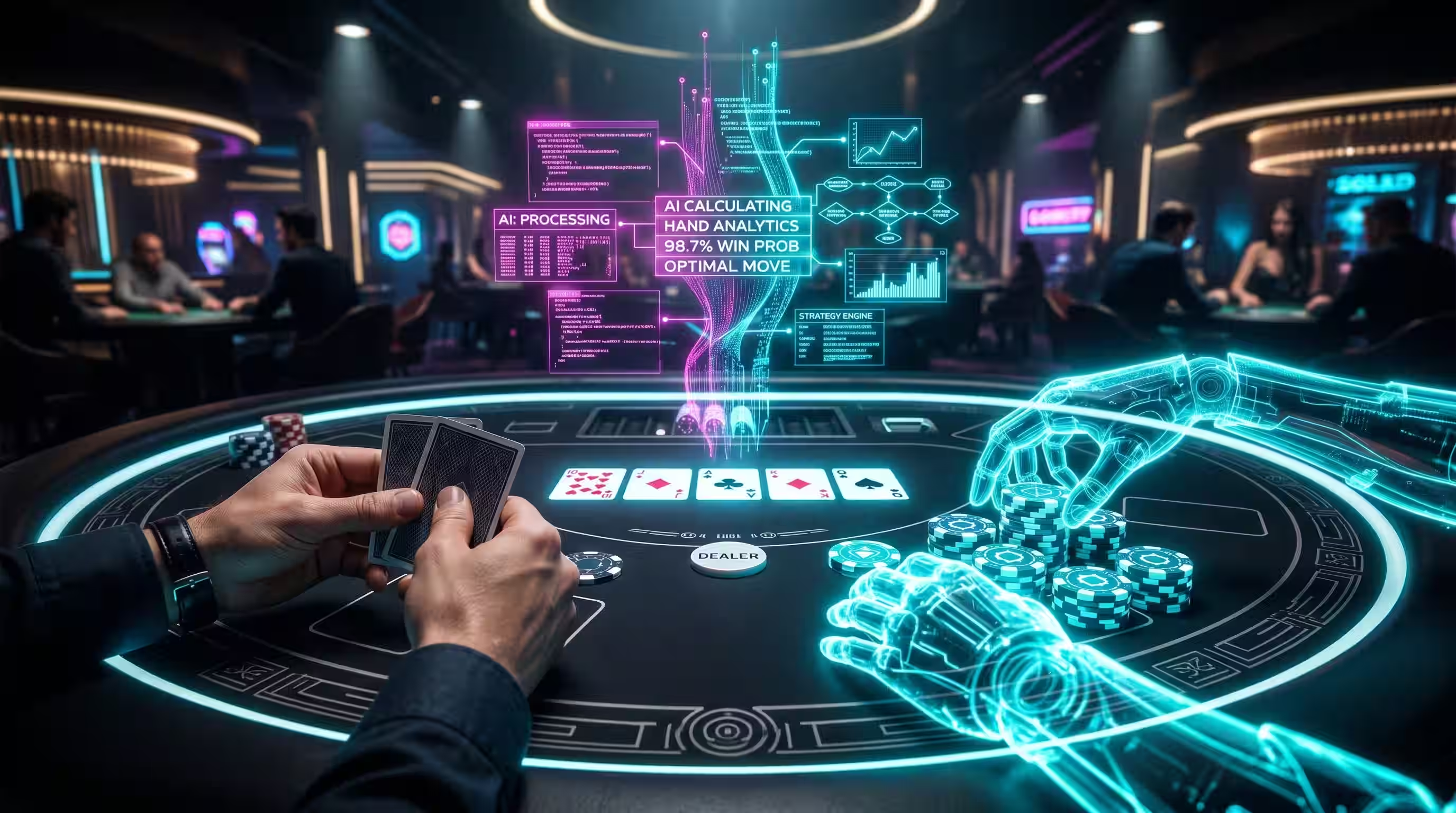
AI poker entrou em uma nova e estranha fase.
A inteligência artificial pode explicar pot odds, sugerir ranges pré-flop, resumir um histórico de mãos e descrever por que um call no river pode ser lucrativo.
Isso parece impressionante.
Mas explicar pôquer não é o mesmo que jogar pôquer.
Na mesa, uma IA deve tomar decisões com cartas ocultas, informações incompletas, tamanhos de stack em mudança, ranges incertos de oponentes e tempo limitado. Ela deve decidir quando blefar, quando apostar por valor, quando mudar o tamanho da aposta e quando o comportamento de um oponente é mais importante do que uma estratégia teoricamente equilibrada.
Ele também deve se lembrar do que aconteceu antes.
O oponente deu overbet no river duas vezes?
Eles mostraram um blefe fraco no showdown?
Eles desistem com muita frequência para 3-bets?
Eles estão mudando sua estratégia porque notaram o padrão da IA?
A IA já consegue calcular pôquer. A questão mais difícil é se ela pode entender uma partida, se adaptar a um humano e executar a decisão correta sem se tornar previsível ou confusa.
Novas pesquisas publicadas ao longo de 2026 estão começando a responder a essa pergunta. A resposta não é nem "a IA resolveu o pôquer" nem "a IA não pode jogar".
A verdade é muito mais interessante.
A Resposta Direta: A IA Pode Jogar Pôquer?
Sim, a inteligência artificial pode jogar pôquer.
Programas especializados de pôquer já demonstraram um desempenho extremamente forte em formatos específicos. Alguns sistemas competiram com sucesso contra jogadores profissionais em No-Limit Hold’em heads-up e multiplayer.
Mas a frase “IA pode jogar pôquer” esconde várias tecnologias diferentes.
Um solver de pôquer especializado não é o mesmo que um modelo de linguagem grande.
Um bot treinado por auto-jogo não é o mesmo que um assistente de IA explicando uma mão em linguagem natural.
Um sistema projetado para uma profundidade de stack fixa não é automaticamente forte em torneios, cash games, short deck, PLO ou formatos de clubes privados.
A resposta mais precisa é:
Alguns sistemas especializados de IA podem jogar certos formatos de pôquer em um nível de elite. Modelos de linguagem de propósito geral podem discutir pôquer fluentemente, mas ainda precisam de estrutura, ferramentas, memória ou sistemas de estratégia externos para jogar consistentemente bem.
O que Realmente Significa "IA de Pôquer"?
Jogadores frequentemente usam o termo IA de pôquer para vários produtos completamente diferentes.
| Tecnologia | Propósito Principal | Como funciona | Risco Principal |
|---|---|---|---|
| Solver de Poker | Estudo de estratégia | Calcula estratégias de equilíbrio aproximadas | Jogadores copiam saídas sem entendê-las |
| Bot de Poker Autônomo | Jogar mãos automaticamente | Lê estados de jogo e escolhe ações | Uso injusto ou proibido em jogos reais |
| Agente de Poker LLM | Raciocínio e decisões em linguagem natural | Processa informações textuais do jogo e explica ações | Erros estratégicos confiantes e execução inconsistente |
| Assistente de Estudo de IA | Ajudar jogadores humanos a aprender | Revisa mãos completas e explica conceitos | Cruzando do estudo para a assistência em tempo real |
Esses sistemas não devem ser tratados como intercambiáveis.
Um solver pode ser estrategicamente poderoso, mas incapaz de manter uma conversa natural.
Um modelo de linguagem pode explicar pôquer lindamente enquanto escolhe uma aposta ruim no river.
Um bot pode executar ações consistentemente, mas não fornecer raciocínio compreensível.
A pesquisa moderna mais forte está tentando combinar essas habilidades.
Por que o Poker é um Teste de IA Tão Difícil
As peças de xadrez são visíveis.
Cartas de pôquer não são.
No pôquer, uma IA nunca tem informações completas sobre o estado real do jogo. Ela conhece suas próprias cartas e o bordo público, mas não conhece a mão do oponente.
Ele deve raciocinar através de probabilidades.
O oponente pode ser forte ou fraco.
A aposta deles pode representar valor ou um blefe.
Seu dimensionamento pode ser equilibrado, acidental ou emocional.
Eles podem estar mudando sua estratégia especificamente para explorar a IA.
Isso torna o pôquer um jogo de informação imperfeita.
A IA não pode simplesmente calcular o melhor movimento com um tabuleiro totalmente visível. Ela precisa calcular estratégias contra muitas mãos ocultas possíveis e muitos comportamentos possíveis do oponente.
Pôquer Não É Uma Decisão
Uma mão de poker contém uma sequência de decisões conectadas.
A ação pré-flop muda os ranges prováveis.
O flop muda a força dessas ranges.
O turn remove algumas combinações e adiciona novas sequências.
O river força a comparação final entre valor e blefes.
Uma decisão ruim pré-flop pode criar uma situação impossível no river.
Um tamanho de flop estranho pode remover as mãos de valor necessárias para suportar um blefe posterior.
Uma IA deve entender toda a sequência.
Escolher uma ação que pareça razoável em uma rua não é suficiente.
A ação deve permanecer consistente com uma estratégia multi-street.
Por que Blefar é Difícil para a IA
Blefar é frequentemente descrito como fingir ter uma mão forte.
Essa definição está incompleta.
Um blefe lucrativo requer várias condições:
- o oponente deve ter mãos suficientes capazes de desistir
- o tamanho da aposta deve criar pressão suficiente
- a IA deve representar combinações de valor críveis
- o blefe deve frequentemente conter bloqueadores úteis
- a frequência de blefe não pode se tornar previsível
Uma IA que blefa pouco se torna fácil de desistir contra.
Uma IA que blefa com muita frequência se torna fácil de pagar.
Uma IA que seleciona os bloqueadores errados pode remover as mãos que ela quer que o oponente descarte.
Para a base humana por trás deste conceito, leia nosso Blockers no poker guiar.
Aleatoriedade Não é o Mesmo Que Imprevisibilidade
Um bot de poker fraco pode escolher ações aleatórias.
Isso não o torna estrategicamente imprevisível.
Boas estratégias de pôquer misturam ações em frequências cuidadosamente selecionadas.
Uma mão pode apostar às vezes e fazer check às vezes.
Um bluff-catcher no river pode pagar em uma frequência e desistir em outra.
O propósito não é o caos.
O objetivo é impedir que o oponente explore um padrão fixo.
IA de pôquer forte deve randomizar com estrutura.
Ela deve entender quais mãos pertencem a cada ação e por quê.
A Lacuna entre Saber e Fazer
Um dos maiores problemas para agentes de pôquer baseados em modelos de linguagem é a diferença entre explicar uma boa estratégia e executá-la.
Uma IA pode afirmar corretamente que:
- posição é importante
- o range do oponente está limitado
- a carta do river favorece o agressor
- a mão bloqueia algumas combinações de valor
Então, ele pode escolher um tamanho de aposta ou ação que contradiga sua própria explicação.
Esta é a lacuna entre saber e fazer.
O modelo tem conhecimento de pôquer em forma de linguagem, mas esse conhecimento nem sempre produz uma decisão coerente.
Jogadores humanos experimentam um problema semelhante.
Eles sabem que deveriam desistir, mas pagam porque o pote é grande.
Eles sabem que o oponente raramente blefa, mas se recusam a largar um overpair.
Eles entendem de gestão de bankroll, mas sobem de nível após perder.
Saber pôquer não é o mesmo que jogar pôquer.
O que a Nova Pesquisa de 2026 está Testando
A geração mais recente de pesquisa em IA de pôquer está indo além de uma pergunta simples:
O modelo ganhou ou perdeu?
Pesquisadores também estão estudando:
- qualidade do dimensionamento das apostas
- consciência posicional
- raciocínio de range
- memória
- Modelagem de Oponentes
- consistência estratégica
- a capacidade de explicar decisões
Isso importa porque apenas as fichas do torneio podem ser enganosas.
Um modelo pode rodar bem e terminar em primeiro lugar, tomando decisões ruins.
Outro modelo pode fazer escolhas estratégicas mais fortes, mas perder vários all-ins de alta variância.
O desempenho no pôquer precisa de análise de resultados e análise da qualidade das decisões.
PokerSkill: Dando ao Modelo uma Biblioteca de Estratégias
Uma abordagem recente não pede a um modelo de linguagem para inventar estratégia de poker do nada.
Em vez disso, dá ao modelo acesso a uma biblioteca estruturada de habilidades de pôquer.
O sistema identifica o tipo de decisão atual e recupera apenas as orientações estratégicas relevantes.
Por exemplo, ele pode reconhecer que a situação envolve:
- defesa do big-blind
- um pote com raise único
- um flop seco com Ás alto
- uma decisão de "catch" (pagar) em um blefe no river
O modelo de linguagem então escolhe entre ações razoáveis usando esse contexto estruturado.
Isso é importante porque modelos de propósito geral muitas vezes se distraem com informações irrelevantes ou geram ações fora de faixas de pôquer sensatas.
A biblioteca de habilidades funciona como trilhos em uma estrada.
A IA ainda toma uma decisão, mas tem menos espaço para entrar em território estrategicamente impossível.
Leitores interessados no artigo técnico podem consultar o Pesquisa PokerSkill.
Por que o Conhecimento Humano Ainda Importa
A abordagem PokerSkill destaca um ponto importante:
O desempenho da IA pode depender muito de como o conhecimento humano de pôquer é organizado.
Um modelo de linguagem pode conter milhares de explicações de poker em seus dados de treinamento, mas essas explicações não são automaticamente organizadas em um sistema de decisão limpo.
Especialistas humanos ainda ajudam a definir:
- quais conceitos importam em cada situação
- quais ações são estrategicamente razoáveis
- como os ranges devem ser classificados
- quais erros devem ser evitados
A IA não está substituindo o conhecimento de pôquer.
Está ficando melhor em usar o conhecimento de pôquer quando esse conhecimento é apresentado de forma estruturada.
Arena de Poker: Ganhar Não é o Único Resultado
Outro projeto de pesquisa recente avalia agentes de pôquer de IA em várias dimensões estratégicas em vez de usar apenas fichas totais.
Essa abordagem pergunta se o modelo é consistentemente forte em áreas como:
- Tamanho da aposta
- posição
- agressão
- memória
- adaptação
- Coerência das decisões
Um modelo pode ganhar um torneio, mas ter um desempenho ruim em várias categorias.
Outro pode perder fichas enquanto demonstra uma disciplina estratégica melhor.
Isso se assemelha à análise humana de pôquer.
O resultado de uma sessão não revela automaticamente se um jogador jogou bem.
O Artigo Poker Arena argumenta por um método mais amplo de medir a inteligência no pôquer.
Memória Pode Ajudar uma IA — ou Prejudicá-la
Memória soa como uma vantagem automática.
Se uma IA se lembrar de que um oponente blefou em três rivers, ela deve fazer apostas futuras melhores.
Mas a memória também pode criar problemas.
O modelo pode reagir exageradamente a uma amostra minúscula.
Ele pode tratar uma mão incomum como uma tendência permanente.
Ela pode lembrar de conclusões incorretas.
Pode ficar preso a uma leitura antiga depois que o oponente se ajusta.
Jogadores humanos de pôquer cometem os mesmos erros.
Eles decidem que alguém é um maníaco após um blefe.
Eles rotulam um jogador como 'tight' e não percebem que o jogador mudou de marcha.
Memória útil deve ser atualizada, ponderada pelo tamanho da amostra e separada de narrativas emocionais.
IA Consegue Criar Leituras de Oponentes?
Experimentos recentes sugerem que agentes de IA equipados com memória podem construir modelos cada vez mais detalhados de seus oponentes.
Um agente pode notar que um oponente:
- desiste demais após errar o flop
- usa tamanhos grandes principalmente para valor
- ataca a fraqueza após os checks
- paga muito amplamente com pares
- muda a estratégia após perder
A IA pode então se ajustar.
Isso está mais próximo do pôquer humano exploratório do que de seguir tabelas estáticas.
Mas o oponente também pode se ajustar de volta.
Um verdadeiro agente de poker precisa reconhecer que sua leitura pode ter ficado desatualizada.
O Estudo Mentes que Leem explora como a memória persistente afeta a modelagem do oponente e o engano estratégico.
A IA Entende o Que o Oponente Está Pensando?
É arriscado dizer que uma IA "entende" um oponente da mesma forma que um humano.
Mas agentes de IA podem produzir modelos preditivos úteis.
Eles podem formar declarações como:
- o oponente espera uma continuation bet
- o oponente acredita que o range da IA é fraco
- o oponente pode desistir por causa da pressão anterior
- o oponente provavelmente está se adaptando a aumentos repetidos do botão
Se isso representa compreensão verdadeira ou previsão sofisticada é uma questão filosófica em aberto.
Na mesa de poker, o teste prático é mais simples:
O modelo melhora suas decisões?
LLMs versus Solucionadores de Pôquer Tradicionais
Solvers de poker tradicionais e modelos de linguagem têm pontos fortes diferentes.
| Capacidade | Solver Tradicional | Modelo de Linguagem |
|---|---|---|
| Cálculo de equilíbrio | Forte | Fraco sem ferramentas |
| Explicação em linguagem natural | Limitado | Forte |
| Lidando com perguntas incomuns | Estreito | Flexível |
| Consistência exata de frequência | Forte | Pode ser inconsistente |
| Anotações do oponente e contexto narrativo | Geralmente limitado | Potencialmente útil com memória |
| Risco de informações inventadas | Baixo dentro da árvore resolvida | Maior |
Os sistemas futuros mais fortes podem combinar ambos.
Um solver pode fornecer precisão estratégica.
Um modelo de linguagem pode explicar o resultado, organizar informações do oponente e traduzir saídas complexas em conceitos utilizáveis.
Para uma introdução focada em humanos, leia nossas Guia de Solvers de Pôquer.
O ChatGPT Pode Vencer um Jogador Profissional de Pôquer?
Não há uma resposta universal responsável.
O resultado dependeria de:
- o modelo exato
- o formato do pôquer
- profundidade de stack
- se ferramentas externas são permitidas
- se o modelo tem memória
- o número de mãos
- a força do oponente humano
Um modelo de linguagem geral recebendo uma descrição em texto simples de cada mão é muito diferente de um sistema especializado conectado a um solver, banco de dados de memória e filtro de ações legais.
Contra jogadores casuais, um agente de IA organizado pode evitar muitos erros básicos.
Contra profissionais fortes em uma amostra significativa, consistência, frequências exatas e adaptação tornam-se muito mais exigentes.
Uma explicação fluente nunca deve ser confundida com desempenho comprovado em nível profissional.
IA Pode Ler Tells de Poker ao Vivo?
A IA online recebe principalmente informações digitais:
- Jogo de cartas
- posições
- tamanhos de pilha
- Tamanhos de aposta
- timing
- ações passadas
O pôquer ao vivo adiciona informações físicas:
- movimento corporal
- manuseio de fichas
- padrões de fala
- Expressões faciais
- respirando
- comportamento da tabela
Sistemas de visão computacional podem analisar vídeo, mas interpretar um tell ao vivo de forma confiável é difícil.
Um movimento nervoso pode representar fraqueza, força, desconforto ou nada.
Jogadores humanos fortes raramente dependem de um único sinal físico. Eles combinam comportamento com padrões de apostas, histórico do jogador e a situação estratégica atual.
Uma IA precisaria fazer o mesmo.
O que a IA faz melhor do que a maioria dos humanos
A inteligência artificial tem várias vantagens naturais.
Não se Cansa
Uma IA não perde a concentração após dez horas, a menos que o próprio sistema tenha limites técnicos.
Ele Pode Rastrear Grandes Quantidades de Dados
Ele pode se lembrar de frequências, tamanhos e padrões repetidos em milhares de mãos.
Não Tem Medo de Dinheiro
Uma IA não sente dor emocional ao enfrentar uma grande aposta no river.
Pode Aleatorizar
Um sistema bem projetado pode misturar ações sem escolher apenas a ação que parece mais confortável.
Ele Pode Revisar Decisões Consistentemente
Ele não protege seu ego culpando toda perda por má sorte.
O Que os Humanos Ainda Fazem Melhor
Humanos também retêm vantagens significativas, especialmente fora de ambientes de pesquisa controlados.
Compreendendo o Contexto Social
Um humano pode saber que um oponente está distraído, comemorando, com medo de perder ou tentando impressionar na mesa.
Reconhecendo Mudanças de Regras e Ambiente
Um jogo privado pode conter regras incomuns, acordos informais ou dinâmicas de mesa estranhas que nunca foram incluídas no treinamento da IA.
Interpretando Informações Ambíguas
Um humano pode pedir esclarecimentos ao dealer, entender sarcasmo ou reconhecer quando um histórico de mãos contém um erro.
Exploração Criativa
Jogadores fortes às vezes descobrem um exploit incomum antes que dados suficientes existam para prová-lo estatisticamente.
Sabendo Quando o Modelo Está Errado
Uma IA pode produzir uma resposta confiante a partir de informações incompletas ou incorretas. Um jogador experiente pode reconhecer quando a recomendação não faz sentido.
O Problema da Alucinação
Modelos de linguagem podem inventar detalhes.
No pôquer, isso pode incluir:
- contar o pote incorretamente
- usando o tamanho de stack errado
- alegando que uma combinação de mãos impossível existe
- interpretar mal o board
- usar pagamentos incorretos de torneios
- confundindo regras de Hold'em e Omaha
Uma explicação polida não garante precisão matemática.
Sempre verifique:
- as cartas
- o tamanho do pote
- a ordem de ação
- o stack efetivo
- as regras do jogo
Use o Formatador de Histórico de Mãos de Poker para apresentar mãos claramente antes de pedir a uma IA para revisá-las.
IA de Pôquer e Segurança de Jogos Online
A mesma tecnologia que ajuda os pesquisadores a construir agentes de pôquer pode ser mal utilizada em jogos com dinheiro real.
Operadores online devem distinguir entre:
- um jogador humano estudando após uma sessão
- uma interface legal ou ferramenta de acessibilidade
- um bot jogando automaticamente
- assistência estratégica em tempo real
- compartilhamento de conta ou ghosting
Isso é difícil porque assistência avançada pode não parecer um bot automatizado antigo.
Um humano poderia permanecer no teclado enquanto outro sistema analisa cada decisão.
Esse jogador está tecnicamente clicando nos botões, mas a decisão estratégica pode não ser mais dele.
Estude Depois da Mão, Não Durante
A fronteira mais segura é simples:
- Antes de jogar: estudar conceitos, gráficos e exemplos completos.
- Durante o jogo: tome suas próprias decisões sob as regras da plataforma.
- Após jogar: revisar mãos, calcular equidade e identificar erros.
Ferramentas de estudo de IA podem ser úteis.
Decisões externas em tempo real podem violar as regras da plataforma e prejudicar a integridade do jogo.
Leia nosso Poker Ghosting Explained artigo para a versão humana de assistência em tempo real oculta.
Por que a IA Faz os Jogadores Pensarem que o Pôquer Online é Manipulado
Quando os jogadores perdem para linhas incomuns, eles às vezes assumem que enfrentaram um bot ou um sistema de trapaça.
Essa conclusão pode estar correta em casos isolados.
Mas um jogo estranho não é prova automática.
Humanos tomam decisões incomuns.
Jogadores fracos tomam decisões aleatórias.
Jogadores fortes usam tamanhos inesperados.
A variância produz resultados improváveis.
Preocupações sérias de integridade devem ser relatadas com evidências, em vez de serem convertidas em acusações públicas baseadas em uma única mão.
Para a questão mais ampla de confiança, leia O Poker Online é Manipulado?.
Como os Sites de Poker Podem Detectar Agentes de IA
Operadores podem examinar padrões que oponentes individuais não conseguem ver.
Sinais possíveis incluem:
- tempo de decisão incomum
- consistência extrema em longas sessões
- frequências de ação repetidas semelhantes às de solvers
- informações do dispositivo e do software
- comportamento da conta em várias mesas
- padrões estratégicos compartilhados entre contas
- mudanças em jogo após atividade suspeita de software
Nenhum sinal único prova que uma conta é automatizada.
Segurança forte requer várias formas de evidência.
Os operadores também devem evitar punir jogadores humanos habilidosos simplesmente porque sua estratégia se assemelha à teoria.
A IA Pode Substituir um Treinador de Poker?
IA pode auxiliar um treinador.
Ela pode resumir mãos, organizar erros, explicar terminologia e produzir perguntas para prática.
Mas um bom treinador humano fornece valor adicional.
Um treinador pode:
- identificar vazamentos emocionais
- entender os jogos reais do jogador
- perceber padrões estratégicos repetidos
- desafiar suposições incorretas
- projetar um plano de estudo realista
- reconhecer quando a saída da ferramenta está enganosa
A abordagem mais produtiva pode ser o coaching humano apoiado por ferramentas de IA, em vez de o coaching humano ser substituído completamente.
Os Melhores Usos Legais de IA para Jogadores de Poker
A IA é mais útil quando ajuda você a estudar com mais clareza.
Bons usos incluem:
- resumindo uma sessão concluída
- explicando a terminologia do pôquer
- criando questionários a partir dos seus erros
- comparando faixas possíveis
- organizar notas de bankroll e volume
- transformar saídas de solvers em linguagem clara
- identificando perguntas para revisão mais aprofundada
Para um fluxo de trabalho completo, leia nosso Guia de Treinamento de IA para Pôquer.
Um Fluxo de Trabalho Seguro para Análise de Mãos com IA
- Exportar a mão completa.
- Limpe o histórico. Use o Formatador de Histórico de Mãos de Pôquer.
- Verifique os tamanhos do pote e das pilhas.
- Escreva seu raciocínio original. Faça isso antes de ler a resposta da IA.
- Peça análise baseada em faixas.
- Verifique a matemática independentemente.
- Compare com solvers ou ferramentas de equidade quando apropriado.
- Registre a lição final.
Use o grátis Calculadora de Equidade de Alcance vs Intervalo para testar suposições de range em vez de aceitar automaticamente cada porcentagem da IA.
Perguntas a Fazer a uma IA Após uma Sessão
Perguntas úteis para revisão incluem:
- Quais mãos mais fracas pagam minha aposta no river?
- Quais draws perdidos meu oponente pode blefar?
- Como a carta do turn muda ambos os ranges?
- Estou bloqueando as mãos que quero que meu oponente tenha?
- Qual decisão anterior criou o problema no river?
- Como a análise deve mudar contra um jogador passivo?
- Que informação está faltando neste histórico de mãos?
Essas perguntas forçam o modelo a analisar relacionamentos em vez de produzir uma ação inexplicada.
Acompanhar se o Conselho da IA Realmente Ajuda
Não presuma que usar mais tecnologia melhora automaticamente seus resultados.
Acompanhar:
- quais conceitos você estudou
- quais recomendações você testou
- se o conselho se aplicava ao seu grupo de jogadores
- quais erros de IA você descobriu
- se suas decisões melhoraram ao longo de uma amostra significativa
Use o Rastreador de Sessão de Poker para conectar tópicos de estudo com o desempenho real.
A IA Tornará o Poker Humano Obsoleto?
A IA não eliminou o xadrez.
Isso mudou a forma como os jogadores de xadrez estudam.
O pôquer pode seguir um caminho semelhante, mas com complicações adicionais.
O poker humano continua atraente porque inclui:
- pressão do dinheiro
- personalidade
- competição social
- sinais ao vivo
- conversa de mesa
- tomada de decisão imperfeita
- histórias e rivalidades
As pessoas não assistem pôquer apenas para descobrir um tamanho de aposta matematicamente correto.
Eles observam as pessoas lidarem com a incerteza.
A IA pode se tornar mais forte que os humanos em mais formatos sem substituir o jogo humano em si.
Jogadores Humanos Começarão a Copiar Estilos de IA?
Esse processo já começou através do estudo de solvers.
Jogadores modernos usam:
- apostas de continuação menores
- tamanhos maiores de river polarizados
- ações pré-flop mistas
- blefes baseados em bloqueadores
- construção de faixa mais estruturada
A pesquisa de pôquer com LLM pode adicionar outra camada ao tornar conceitos avançados mais fáceis de explicar.
O risco é que os jogadores copiem a linguagem sem entender as decisões.
Dizer “vantagem de range” não prova que uma aposta é boa.
Dizer "blocker" não justifica um blefe.
Vocabulário de estratégia não é estratégia.
Por que o Pôquer Heads-Up Permanece o Principal Laboratório de IA
No-Limit Hold’em Heads-up é atraente para pesquisa em IA porque contém apenas dois jogadores, mas ainda oferece enorme complexidade estratégica.
Pesquisadores podem estudar:
- Blefando
- adaptação
- estratégias mistas
- informação oculta
- históricos longos de partidas
O pôquer multiplayer adiciona ainda mais complexidade porque cada oponente pode ter incentivos e ranges diferentes.
Para o lado humano do jogo um contra um, leia nosso Estratégia de Pôquer Heads-Up guiar.
A Próxima Fase da IA de Poker
Os próximos grandes sistemas de IA de pôquer provavelmente combinarão vários componentes:
- um forte motor estratégico
- memória persistente, mas cuidadosamente ponderada
- Modelagem de Oponentes
- explicação em linguagem natural
- filtragem de ação legal
- estimativas de incerteza
- ferramentas para verificar cálculos de pote e stack
O objetivo não será apenas escolher uma ação forte.
O sistema também precisará explicar:
- por que a ação é forte
- em que suposições ela se baseia
- quão confiante ela está
- como a ação muda contra um oponente diferente
Isso tornaria a IA de pôquer mais útil para pesquisa e estudo — e mais fácil de auditar quando cometer erros.
Por que este Tópico Pode Rankear
Este artigo tem como alvo um cluster de pesquisa novo e em expansão:
- AI poker
- a IA pode jogar pôquer
- IA de pôquer
- ChatGPT pôquer
- Agentes de poker LLM
- inteligência artificial no pôquer
- Bot de pôquer de IA
- IA vs jogadores de pôquer
- o ChatGPT pode vencer profissionais de pôquer
- pesquisa de IA de pôquer
Ele também se conecta naturalmente com conteúdo existente sobre treinamento de pôquer com IA, solvers, pôquer heads-up, ranges, ghosting, segurança de pôquer online e ferramentas gratuitas de pôquer.
O tópico tem valor de notícia atual e valor duradouro de "evergreen", pois novos modelos e experimentos de pôquer continuarão a aparecer.
A Resposta Real
A IA já consegue jogar pôquer de forma impressionante.
Sistemas especializados demonstraram que máquinas podem calcular estratégias equilibradas, blefar e competir contra humanos experientes.
Modelos de linguagem adicionam algo diferente: conversação, explicação, memória e potenciais modelos de oponente legíveis.
Mas a fluência no idioma pode esconder fraquezas estratégicas.
Uma IA pode soar como um profissional enquanto conta mal o pote.
Pode descrever bloqueios ao selecionar o blefe errado.
Ele pode se lembrar de um oponente enquanto reage exageradamente a uma amostra minúscula.
O futuro do pôquer de IA não pertencerá ao modelo que fala com mais confiança. Pertencerá ao sistema que conecta estratégia correta, memória confiável, cálculos verificados e execução consistente.
Jogadores humanos devem tratar a IA da mesma forma que tratam qualquer ferramenta poderosa de poker.
Use-o para estudar.
Verifique seu trabalho.
Entenda suas suposições.
Não o use como assistência secreta em tempo real.
E nunca confunda uma bela explicação com a prova de que a decisão está correta.
IA pode falar pôquer.
Está aprendendo a jogar.
A lacuna entre essas duas habilidades é onde a história mais importante da tecnologia de pôquer está acontecendo agora.