
Many poker players think they are reviewing hands when they are really just replaying pain.
They open one ugly spot, remember the river, get annoyed again, and then ask the same useless question: “How did he have that?”
That is not real study.
If you want to improve, you need to know how to review poker hands the right way. Good hand review is not emotional replay. It is a structured process that turns one hand into lessons about ranges, bet sizing, population tendencies, and repeatable leaks.
That is where the real value is.
Why Most Poker Hand Reviews Fail
Most reviews fail because players focus on the result instead of the decision tree.
They look at whether they won or lost. They look at the showdown. They look at the cooler, the suckout, or the bluff that got snapped. Then they stop there.
That creates terrible study habits.
A good hand review asks better questions:
- What did the ranges look like preflop?
- Who had the range advantage on the flop?
- What was the purpose of each bet?
- What changed on the turn?
- Was the river decision based on logic or emotion?
That is the difference between frustration and improvement.
Start by Cleaning Up the Hand History
This sounds basic, but it matters a lot.
If the hand history is messy, your thinking usually becomes messy too. Raw hand notes copied from chats, screenshots, or app exports often make review harder than it needs to be.
That is why one of the best first steps is to clean the hand into a readable format before you even start analyzing it. A properly structured hand lets you see the action clearly, follow stack sizes, and focus on the actual decisions instead of wasting energy decoding the format.
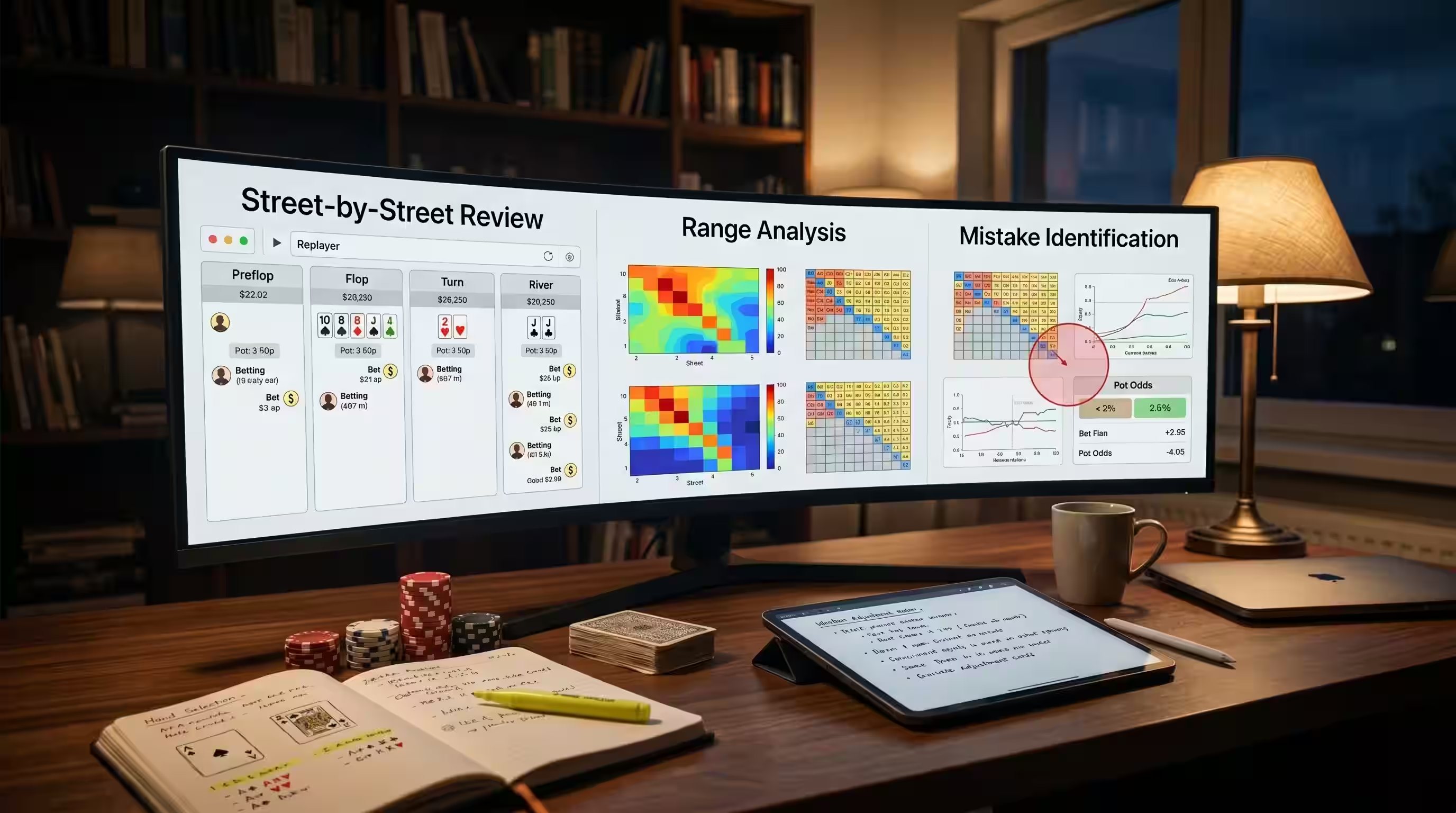
That is exactly where a tool like the Poker Hand History Formatter fits naturally into study. It is not the study itself. It just removes unnecessary friction so the review becomes clearer and faster.
Review the Hand Street by Street, Not as One Emotional Story
This is one of the biggest upgrades you can make.
A lot of players review a hand backwards. They see the river first, then let the result infect everything earlier in the hand.
Do not do that.
Review the hand in order:
- preflop
- flop
- turn
- river
Each street should answer its own question.
Preflop asks whether the range entry made sense.
Flop asks who had the advantage and whether the bet achieved anything.
Turn asks what changed structurally.
River asks whether the value or bluff-catch decision was actually justified.
This is one reason reading board texture in poker matters so much. If you cannot explain what the board is doing to both ranges, the whole review becomes shallow very quickly.
Do Not Ask “What Did He Have?” Ask “What Can He Have?”
This is one of the most important study habits in poker.
Weak reviews obsess over the exact showdown hand.
Strong reviews care more about the whole range.
Why? Because poker decisions are not made against one revealed hand. They are made against the collection of hands an opponent can reasonably reach the spot with.
That is why better hand review means better range thinking. You are not just trying to explain one weird result. You are trying to understand whether your decision worked against the range you were actually facing.
Use Equity Tools to Test Assumptions, Not Replace Thinking
This is where many players either improve quickly or become robotic.
Equity tools are useful, but only if you use them for the right reason. They should help you test assumptions, not avoid thinking.
If you reach a spot where you are unsure whether your turn continue made sense, or whether a river bluff-catch was justified against a realistic range, you need a clean way to compare how ranges perform.
That is where the Range vs Range Equity Calculator becomes genuinely helpful. It lets you move from vague phrases like “I think I was ahead enough” to a more grounded question: how does my range actually perform against the range I assigned?
That is not solver worship. That is just better study.
Look for Repeat Leaks, Not Only Interesting Hands
This is where many players waste their study time.
They review the most dramatic hands, not the most important patterns.
A huge bluff on the river may be exciting to talk about. But your actual win rate may be getting damaged much more by smaller repeated leaks, like:
- opening too wide from early position
- auto-c-betting bad flops
- calling too much on the turn
- misplaying medium-strength hands
- overvaluing weak top pair in bloated pots
That is why strong hand review looks for patterns across many hands, not just one unforgettable disaster.
This is also where a structured tracker can help. If you are trying to connect study with actual performance patterns over time, a tool like the Poker Session Tracker becomes useful because it helps you notice where your results and your decision quality keep colliding.
Separate Technical Mistakes from Emotional Mistakes
This matters more than most players think.
Not every bad hand is a technical mistake. Some are emotional mistakes wearing technical clothes.
For example:
- a bad call because you were tilted
- a forced bluff because you wanted to “win one back”
- a loose defend because you were bored
- a bad shove because folding felt weak
These are not the same as range-construction mistakes or sizing mistakes. They come from mindset problems, not purely strategic confusion.
That is why honest hand review has to ask not only “What was the right play?” but also “What state was I in when I made this decision?”
This is exactly where mental fitness in modern poker connects directly to technical improvement. If your emotional state keeps damaging decisions, your hand review should reflect that.
Good Hand Review Usually Looks Boring
This is the funny part.
The most useful study often looks less dramatic than players expect.
It looks like:
- cleaning one raw hand history
- assigning realistic preflop ranges
- checking whether the flop really favored you
- testing whether the turn barrel had enough fold equity
- deciding whether the river call needed 25% or 33% to work
That is not sexy poker content.
It is profitable poker content.
And that is how small edges become meaningful results over time.
How to Review Poker Hands More Effectively
- Format the hand clearly first: messy histories create messy thinking.
- Review in order: do not let the river result infect the flop decision.
- Think in ranges: not in one revealed hand.
- Test assumptions: use tools to check whether your logic actually holds.
- Look for repeats: one leak repeated 100 times matters more than one dramatic hand.
- Separate technical from emotional errors: they need different fixes.
If You Remember One Thing
Learning how to review poker hands properly is not about replaying bad beats. It is about turning one hand into a clearer understanding of ranges, board interaction, pressure, and repeat mistakes.
That is the real purpose of study.
Once you start reviewing hands that way, poker improvement becomes much more measurable and much less emotional.
FAQ: How to Review Poker Hands
How should I review poker hands the right way?
You should review poker hands by cleaning the hand history, analyzing each street in order, assigning realistic ranges, and focusing on the quality of your decisions instead of the final result.
What is the biggest mistake players make in hand review?
The biggest mistake is reviewing hands backwards from the outcome instead of evaluating the decision process street by street.
Should I use tools when reviewing poker hands?
Yes, tools can help a lot when they make the hand clearer or help test assumptions about ranges and equity, as long as they support thinking instead of replacing it.
What kind of hands should I review most often?
You should review the hands that reveal repeat leaks most clearly, not only the most dramatic coolers or bad beats.
Why does hand review improve poker results so much?
Because it helps players find recurring mistakes, sharpen range thinking, improve postflop decisions, and separate technical leaks from emotional ones.