Board texture in poker is one of the most important postflop concepts in the game, but many players still treat it too vaguely.
They look at a flop, call it “dry” or “wet,” and think that is enough.
It is not.
Reading board texture in poker is not just about labeling a board. It is about understanding how the board interacts with ranges, how much equity is available, which hands improve, which hands become fragile, and what kinds of bets actually make sense.
That is the real skill.
And once you get better at it, almost every postflop decision becomes cleaner.
What Board Texture in Poker Actually Means
Board texture refers to the structure of the community cards and how connected, coordinated, or static they are.
In practical terms, board texture tells you how likely the board is to:
- support strong made hands
- create drawing opportunities
- change dramatically on future streets
- favor one range more than another
That is why board texture matters so much. It helps you understand not only what the board looks like now, but what kinds of hands and future runouts the board naturally invites.
Dry Boards and Wet Boards Are Only the Beginning
Most players first learn board texture through the dry-versus-wet distinction.
That is useful, but it is not enough.
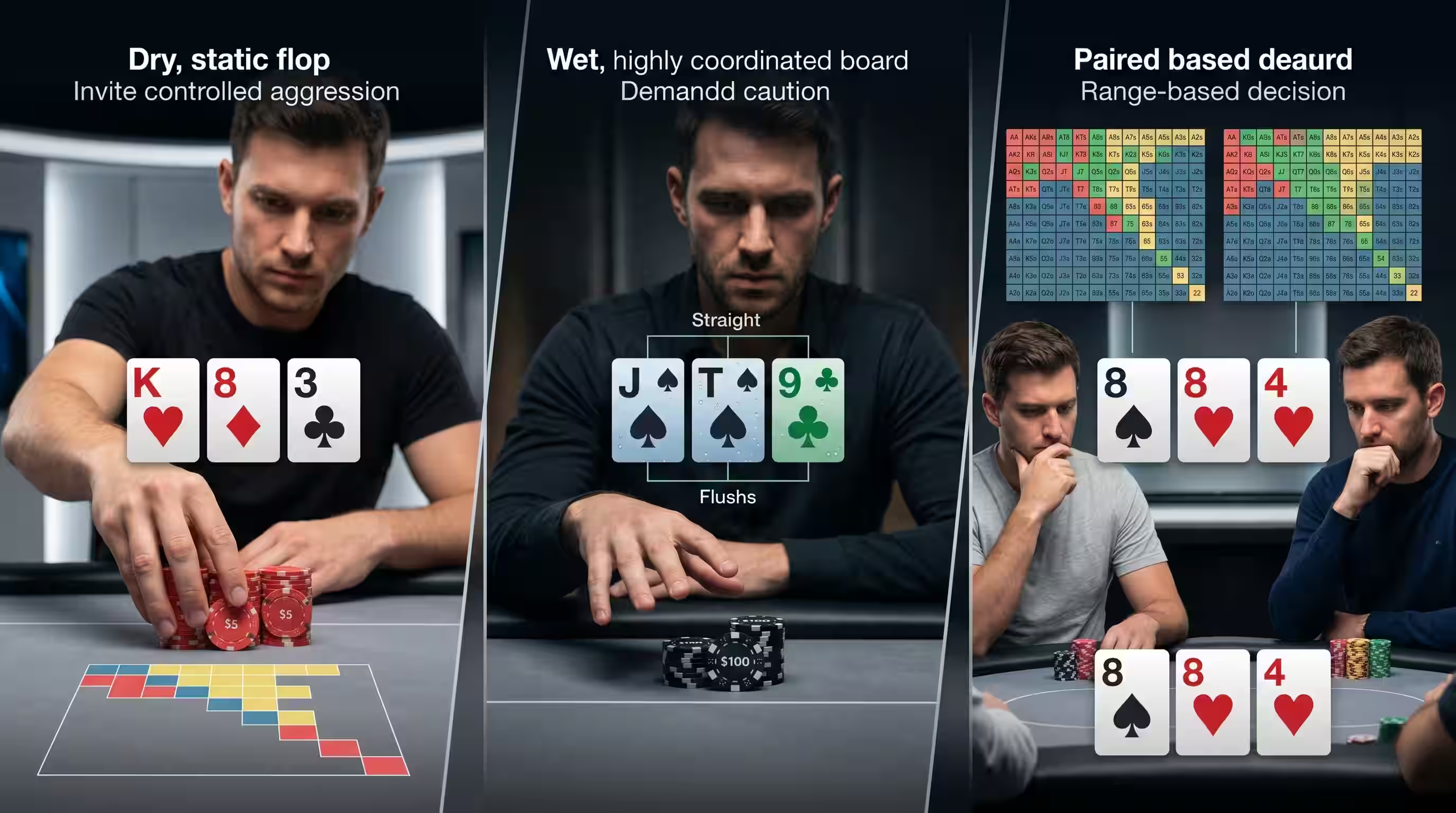
A dry board is usually disconnected and less likely to offer many strong draws. A board like A♣ 7♦ 2♠ is a classic example. It does not connect well with a wide calling range, and it usually stays relatively stable on many turn cards.
A wet board is more connected and more volatile. Something like J♠ 10♠ 8♥ creates straight draws, flush draws, pair-plus-draw combinations, and many more future complications.
That basic distinction helps. But strong players go further than that.
Why Board Texture Is Really About Range Interaction
This is where many players stop too early.
They describe the board correctly but still play it badly because they do not ask the next question: who does this board actually favor?
That is the heart of reading board texture well.
A board is not just “wet.” It is wet for somebody. A board is not just “dry.” It is dry in a way that helps some ranges more than others.
For example, an ace-high dry board often favors the preflop raiser because that player usually has more strong ace-x and overpair combinations. A low connected board may hit the caller’s range much harder because it contains more suited connectors, smaller pairs, and hands that make strong draws.
That is why board reading is really range reading wearing a visual disguise.
Static Boards and Dynamic Boards Matter More Than Players Think
This is one of the most useful upgrades you can make in your thinking.
Some boards are static. They do not change much on future streets. If the flop is A♣ 7♦ 2♠, many turn cards do not radically alter who is ahead or how the action should unfold.
Other boards are dynamic. They can swing hard on the turn and river. A board like 9♠ 8♠ 6♦ can change everything with a spade, a seven, a ten, a pairing card, or many overcards.
This matters because dynamic boards require more caution and more planning. Static boards allow cleaner value betting, simpler c-bets, and more confidence that your current read will stay relevant.
Why Board Texture Changes C-Betting Strategy
This is one of the clearest places where texture matters immediately.
On boards that strongly favor your range and stay relatively static, c-betting often becomes easier. On boards that connect heavily with the caller’s range and remain volatile, auto-c-betting becomes much more dangerous.
That is exactly why continuation bet strategy cannot be separated from board texture. A flop bet is not good because you raised preflop. It is good when the board gives your range a reason to bet.
Once you start seeing texture that way, a lot of bad flop bets become obvious.
Board Texture Changes What Counts as a Strong Hand
This is another place where players get trapped.
A hand does not have one fixed strength across all textures.
Top pair on A♣ 7♦ 2♠ is very different from top pair on J♠ 10♠ 8♥. An overpair on K♦ 6♣ 2♣ is not the same as an overpair on 9♠ 8♠ 7♦. The board changes how vulnerable your hand is, how many worse hands can continue, and how realistic stronger hands are.
That is why reading board texture well makes hand strength feel more honest. It stops you from treating every top pair or overpair like the same category of hand.
Why Draw-Heavy Boards Punish Lazy Betting
On wet, dynamic textures, weak betting gets exposed fast.
Some players still use the same size and the same logic on every flop. That is a serious leak.
Draw-heavy boards require better thought about:
- how much equity needs to be charged
- how many worse hands can still continue
- how often future cards will damage your current edge
- whether your hand wants protection, value, or pot control
This is one reason protection bets in poker are so often misunderstood. Players bet because the board feels dangerous, not because they actually understand what the danger means for ranges and EV.
Board Texture Shapes Bluffing More Than Courage Does
A lot of bad bluffs start with this thought:
“That card looks scary.”
Maybe. But scary to whom?
That is the real question.
A scare card only matters if it changes the range story in a believable way. If the new card helps your perceived range, hurts your opponent’s continuing range, or creates real fold equity, then pressure may make sense. If not, then the “scary” card may only be visually dramatic without being strategically useful.
This is exactly why fold equity in poker is so often misused. Players assume texture creates folds when in reality the opponent’s range is still strong enough to continue.
Small Bet Sizes Often Work Best on Certain Textures
Board texture also helps determine sizing.
On boards where one player has a clear range advantage and the board remains relatively stable, small bets often do a lot of work. They fold out weak hands, deny equity efficiently, and allow wider range betting without bloating the pot unnecessarily.
That is why small bet sizes are more powerful than most players think. Their strength often comes directly from how well they fit the texture.
On more dynamic boards, sizing may need to change because more draws exist, more pressure is needed, and future cards can distort the hand quickly.
Turn Cards Do Not Mean the Same Thing on Every Texture
This is where many average players fall apart.
They see a turn card and react to it emotionally instead of structurally.
A flush-completing turn on a dry flop means something different than a flush-completing turn on an already draw-heavy board. A high overcard can be powerful on one texture and irrelevant on another. A paired turn can freeze action on one board and unlock pressure on another.
That is why turn play is the most neglected street in poker. The turn punishes players who saw the flop as a picture instead of a structure.
Position Makes Board Texture Easier to Use
Position and board texture work together.
When you are in position, texture becomes easier to navigate because you get more information before choosing how to react. You can see whether the out-of-position player checks a dynamic board, sizes strangely on a static one, or shows discomfort on a runout that should favor one range heavily.
This is one reason position in poker matters so much. Position does not only make poker easier in a general sense. It makes board texture easier to interpret and exploit.
How Strong Players Read Board Texture Better
Strong players usually do a few things differently:
- they stop at the board for less time and think about ranges faster
- they notice how likely the board is to change on future streets
- they adjust hand strength more honestly based on texture
- they choose bet sizes that fit the structure instead of habit
- they do not confuse visual drama with strategic danger
That is the real difference.
They are not memorizing labels better. They are seeing what the board actually does.
How to Read Board Texture in Poker More Effectively
If you want a cleaner process, ask these questions on the flop:
- Is this board dry or wet?
- Is it static or dynamic?
- Which range does it favor more?
- How many strong draws exist?
- How much can future cards change the value of my hand?
- What kind of bet size fits this structure best?
That framework alone will make many of your postflop decisions much clearer.
The Biggest Board Texture Mistakes Players Make
- Using labels without meaning: Saying “wet board” is not enough if you still bet it badly.
- Ignoring range interaction: Texture matters because of ranges, not because of appearance alone.
- Overvaluing medium-strength hands: Many hands shrink fast on coordinated boards.
- Auto-c-betting dynamic textures: Not every flop belongs to the preflop aggressor.
- Misreading scare cards: A scary card is only useful if it changes something real.
If You Remember One Thing
Reading board texture in poker is not about describing the board. It is about understanding how the board changes the meaning of ranges, hand strength, pressure, and future streets.
That is the skill that matters.
Once you start thinking that way, your postflop decisions become less automatic, less emotional, and much more profitable.
FAQ: Board Texture in Poker
What does board texture mean in poker?
Board texture in poker refers to how connected, coordinated, or stable the community cards are, and how those cards interact with players’ ranges.
What is the difference between a dry board and a wet board?
A dry board has fewer draws and usually changes less on future streets, while a wet board creates more straight and flush possibilities and is more volatile.
Why does board texture matter so much in poker?
Board texture matters because it affects c-betting, value betting, bluffing, hand strength, and how future streets are likely to change the hand.
What is a dynamic board in poker?
A dynamic board is one where many turn and river cards can change hand strength and range interaction significantly.
How can I get better at reading board texture?
You can improve by asking better questions about range interaction, draw potential, future-card volatility, and what kind of betting actually fits the board.