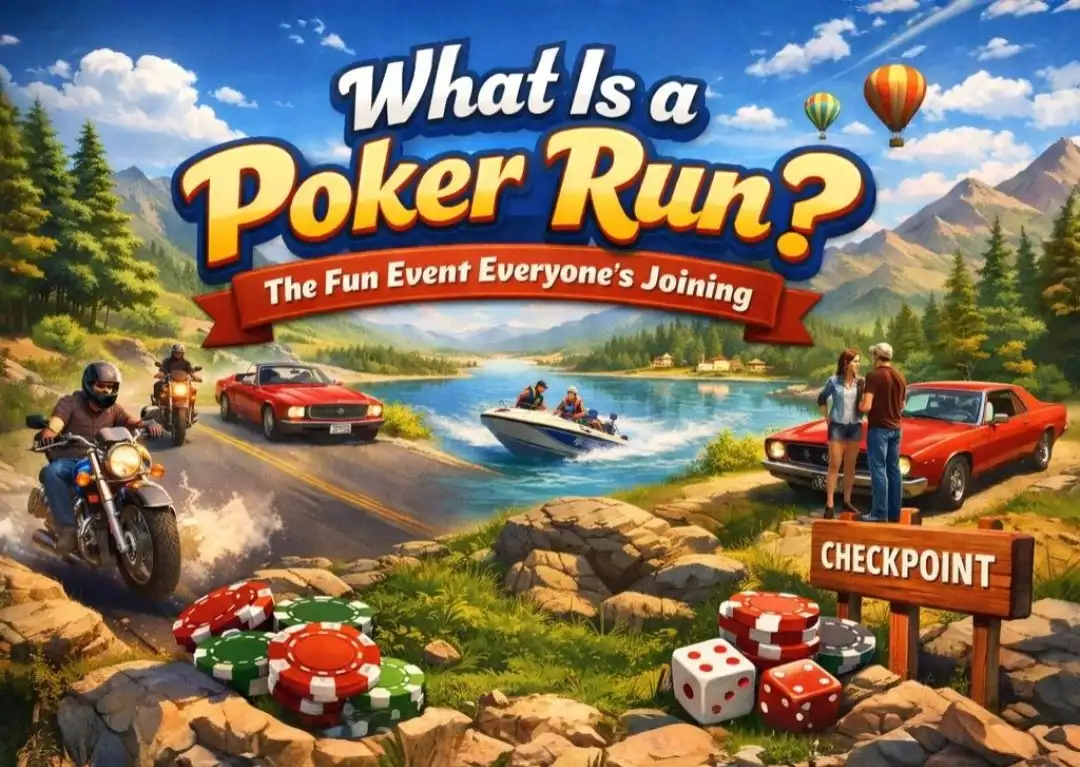
Why the Term “Poker Run” Confuses So Many People
When someone hears the words poker run, the first thought is usually gambling or casino poker. Many people imagine players sitting at a table, betting money, and using poker skills.
That assumption is completely wrong.
A poker run has very little to do with real poker strategy. It is mainly a fun, social activity where people travel from one place to another, collect cards, and enjoy the experience. Understanding this difference is important, especially for first-time participants.
What Is a Poker Run in Very Simple Words
A poker run is an event where participants visit several locations, called checkpoints, and receive one playing card at each stop. When the event ends, everyone has a small poker hand, usually five cards.
The person with the best hand wins a prize, but the main goal is participation, not competition. No one plays hands against each other, and no one makes betting decisions.
Think of it like this:
A poker run is a road trip or journey with a card-collecting game attached to it.
Why It Is Called a “Poker Run”
The word poker is used only because poker hand rankings decide the winner.
The word run refers to the journey participants take between checkpoints.
So the name simply describes:
- Collecting poker cards.
- While moving from place to place.
There is no deeper poker meaning behind it.
How a Poker Run Works
Poker runs follow a very relaxed and beginner-friendly structure.
First, participants register for the event. This usually includes paying an entry fee. In many cases, this money goes toward charity, event organization, or community causes.
Next, participants receive:
- A route map or list of checkpoints.
- Instructions on where and when to finish.
At each checkpoint:
- A participant draws one card (sometimes face-down, sometimes face-up).
- Cards are recorded or stamped to avoid cheating.
After all checkpoints are completed, everyone meets at a final location. Cards are revealed, hands are ranked, and prizes are awarded.
Some events allow optional redraws, usually for a small extra fee. This is often done to raise more money for charity.
Different Types of Poker Runs
Poker runs are flexible and can be built around many activities.
- Motorcycle poker runs are the most common. Riders travel together between stops, often supporting charities or memorial events.
- Car poker runs are popular with classic car clubs and community groups. These feel like relaxed road rallies.
- Boat poker runs happen on lakes or coastal areas. Participants travel between docks or marinas.
- Walking or cycling poker runs are common for schools, fitness groups, and local fundraisers.
No matter the format, the rules stay the same.
Why Poker Runs Are So Enjoyable
Poker runs are popular because they remove pressure and make participation feel relaxed and fun rather than competitive or stressful.
There is:
- No poker skill required
Participants do not need to understand poker strategy, hand reading, or betting rules. Everyone has the same chance of winning because the outcome depends on luck, not experience or knowledge.
- No aggressive competition
Poker runs are not about beating other players through skill or speed. Participants are not eliminated, and no one is forced to compete directly. This creates a friendly and supportive environment.
- No financial stress
There is usually no risk of losing money during the event. Entry fees are fixed and often go toward charity, so participants know their spending in advance and feel comfortable taking part.
Because of these factors, people focus more on the social experience and the journey itself. Meeting new people, traveling together, and enjoying the relaxed atmosphere matter far more than winning prizes.
That is why many participants return to poker runs year after year, even if they never win a hand.
Is a Poker Run Gambling or Not?
This is one of the most searched questions on Google.
In most cases, poker runs are not considered gambling, especially when organized as charity or community events. There is usually:
- No betting between players.
- No skill advantage.
- No risk of losing money during play.
Entry fees are usually treated as participation or donation costs. However, local laws can differ, so organizers follow regional rules carefully.
Poker Run vs Casino Poker
Poker runs and casino poker may use playing cards, but they are completely different types of activities with very different purposes.
Casino poker involves:
- Skill: Players must understand hand strength, odds, and opponent behavior. Better players usually perform better over time.
- Strategy: Every decision matters, including when to bet, raise, call, or fold. Players constantly adjust their strategy based on the situation.
- Betting: Money is wagered on every hand, and players can win or lose significant amounts depending on their decisions.
- Long-term decision making: Success in casino poker depends on making correct decisions consistently over many hands and sessions, not just one lucky moment.
Poker runs involve:
- Travel: Participants move from one checkpoint to another, turning the event into a journey rather than a stationary game.
- Card collection: Players simply collect cards at each stop. There are no choices or actions that affect which card they receive.
- Luck: The final result depends entirely on the random cards collected, not on experience or decision-making.
- Social interaction: The focus is on meeting people, talking, and enjoying the event together, not competing aggressively.
Simple Way to Understand the Difference
A poker run is closer to a raffle combined with a group journey, while casino poker is a competitive strategy game where skill and money are constantly at risk.
Understanding this difference helps people join poker runs with the right expectations and enjoy the experience for what it truly is.
Why Poker Runs Are Great for Charity Events
Poker runs work extremely well for fundraising.
They encourage participation because:
- People feel they are getting an experience, not just donating.
- The event feels fun, not serious.
- Optional redraws and raffles increase donations naturally.
This is why many charities prefer poker runs over traditional fundraising methods.
Who Usually Participates in Poker Runs
Poker runs attract a wide range of people because they are simple, social, and pressure-free events. You don’t need any special skills to take part, which makes them welcoming to almost everyone.
You’ll often see:
- Families
Many poker runs are family-friendly events. Parents, children, and relatives join together because the activity is safe, relaxed, and focused on fun rather than competition. - Beginners
First-time participants are very common. Since poker runs do not require poker knowledge or strategy, beginners feel comfortable joining without fear of doing something wrong.
- Hobby groups
Motorcycle riders, car enthusiasts, boat owners, cyclists, and walkers often take part as groups. Poker runs give them a shared activity that fits naturally with their hobby. - Social clubs
Local clubs and organizations use poker runs as a way to spend time together outside regular meetings. The event encourages bonding and group interaction. - Community members
Many participants simply want to support a local cause or enjoy a community event. Poker runs are popular at festivals, fundraisers, and local gatherings.
You don’t need poker knowledge, gambling experience, or a competitive mindset to join. As long as you follow the route and collect your cards, you can relax and enjoy the experience.
That openness is one of the main reasons poker runs continue to attract such a diverse group of people.
Why Poker Runs Keep Growing in Popularity
Poker runs succeed because they offer something modern entertainment often lacks: real-world connection.
They combine:
- Movement
- Social interaction
- Simple game mechanics
- Shared experience
In an age where many activities are screen-based, poker runs feel refreshing and memorable.
Frequently Asked Questions
What is a poker run event?
A poker run is a social or charity event where participants collect playing cards at checkpoints and form a poker hand at the end.
How many cards do you get in a poker run?
Most poker runs use five cards, one from each checkpoint.
Do I need poker skills to join a poker run?
No. Poker runs are based on luck and participation, not skill.
Are poker runs legal?
Yes, in most regions, especially when run as charity events, but local laws may vary.
Final Thoughts
A poker run is not about poker mastery or gambling. It is about fun, community, and shared movement. That is why people of all ages enjoy them and why they continue to grow in popularity.
If you want an activity that combines travel, social connection, and light competition without pressure, a poker run is exactly that.
At BluffingMonkeys, we do more than just share poker strategy, reviews, and guides. We help players stay connected to the best games, latest updates, and biggest opportunities. Be sure to follow all of our social media channels so you never miss important announcements, bonuses, promotions, special events, and new offers. Keep exploring our content, and when you’re ready to join the action, use our live chat button on the homepage to connect with us or message @bluffingmonkeys24_7 on the Telegram App.
 Hindi
Hindi Russian
 Spanish
 Brazilian Portuguese
 Simplified Chinese
 English