
Short Deck Poker-also known as 6+ Hold’em-went from high-stakes curiosity to global trend in just a few years.
What started as a niche format in Asian high-stakes cash games is now a staple in private games, tournament series, and online platforms. It’s faster, swingier, and far more aggressive than traditional Texas Hold’em.
If you’ve only played regular Hold’em, Short Deck feels familiar-but it plays very differently.
Here’s what you need to know about the rules, core strategy adjustments, and why this format keeps gaining momentum in 2026.
What Is Short Deck Poker?
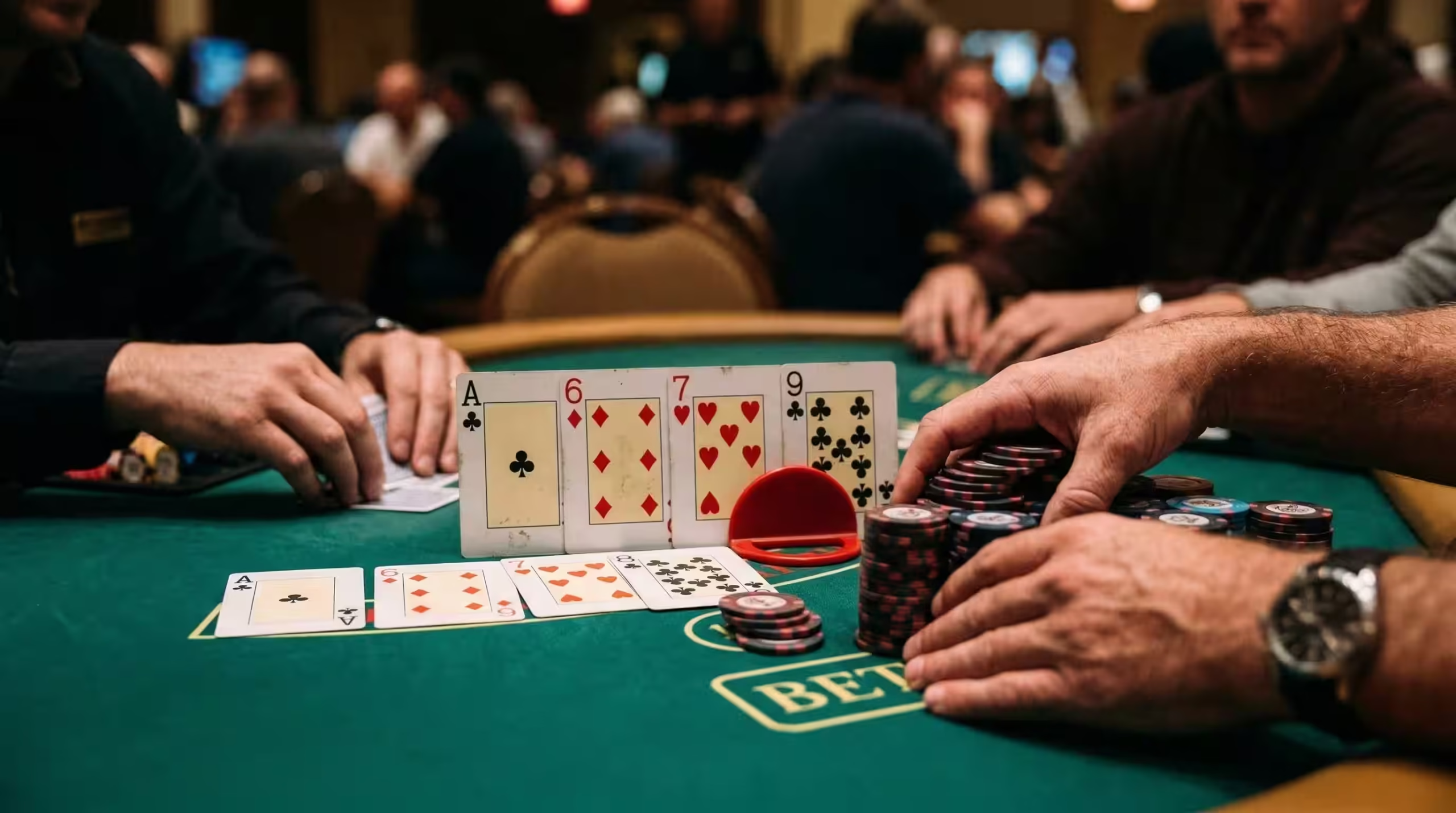
Short Deck (6+) is a variation of Texas Hold’em where the deck is reduced.
Instead of 52 cards, the game uses 36 cards. All cards ranked 2 through 5 are removed.
The remaining deck includes:
- 6 through Ace
Everything else looks similar:
- Two hole cards
- Five community cards
- Standard betting rounds
But the deck change alters probabilities dramatically.
Short Deck Poker Rules
Most Short Deck games follow these key adjustments:
1. Flush Beats a Full House (In Many Versions)
Because there are fewer cards, flushes are harder to make than full houses.
Many formats rank hands as:
- Straight Flush
- Four of a Kind
- Flush
- Full House
- Straight
- Three of a Kind
- Two Pair
- One Pair
- High Card
Always confirm local rule variations before playing.
2. Aces Can Play as Low (A-6-7-8-9)
In Short Deck, the lowest straight is: A-6-7-8-9.
Because 2-5 are removed, Ace connects directly to 6. This adds extra straight potential.
3. Higher Hand Frequencies
With fewer cards:
- Players hit pairs more often
- Straights are more common
- Big hands collide more frequently
Equities run closer. That changes preflop and postflop aggression dramatically.
Why Short Deck Is Trending
1. Action-Heavy Gameplay
Short Deck creates more draws, more strong hands, and more aggressive betting.
Equity runs closer preflop. For example:
In standard Hold’em: AK vs QQ is roughly 43% vs 57%.
In Short Deck: Equities compress. Many matchups are closer to 48/52 territory.
This encourages looser calls and bigger pots.
2. Faster Games
With antes often replacing blinds in Short Deck structures, pots are larger preflop. Players are incentivized to:
- Enter more pots
- Defend more frequently
- Play aggressively
It feels dynamic and explosive.
3. High-Stakes Adoption
Short Deck gained popularity in Asian high-stakes cash games, private VIP environments, and Triton Series tournaments. When elite players adopt a format, it spreads. Visibility drives trend growth.
Key Strategy Differences in Short Deck
Short Deck is not just “looser Hold’em.” Major adjustments are required.
1. Starting Hand Values Shift
Hands like medium pairs, connected cards, and suited broadways increase in relative value.
Meanwhile, small pocket pairs (which no longer exist below 6) and weak offsuit hands lose appeal. Because equities run closer, hands that can make strong multi-street value perform better.
2. Sets vs Straights vs Flushes
Because of deck compression:
- Straights are more common.
- Full houses appear more often.
- Flushes are rare (hence ranking change).
This creates reverse implied odds scenarios. Top set isn’t automatically safe. Board textures develop fast.
3. Aggression Is Mandatory
Passive play gets punished. Why? Because pots are bigger preflop, equities are closer, and initiative matters more.
Short Deck rewards pressure, semi-bluff aggression, and thin value betting. Tight, slow-play strategies often backfire.
4. Bluffing Requires Adjustments
In traditional Hold’em, dry boards allow high c-bet frequencies. In Short Deck, boards connect more frequently.
You must choose bluff spots carefully, understand blocker effects, and respect board connectivity. Bluffing blindly burns chips quickly.
5. Preflop 3-Betting Increases
Because equities are closer, 3-betting frequency rises, calling ranges widen, and multiway pots are common. Short Deck preflop ranges are generally wider and more aggressive.
Common Beginner Mistakes in Short Deck
- Overvaluing Top Pair: Top pair is often not enough. With so many straight possibilities, one-pair hands lose relative strength.
- Slow Playing Too Much: Board textures shift quickly. Giving free cards is dangerous.
- Ignoring Hand Ranking Differences: Forgetting flush > full house (in many formats) can be catastrophic. Always confirm ranking before playing.
- Playing It Like Standard Hold’em: Short Deck requires strategic recalibration. Copying regular Hold’em ranges without adjustment is expensive.
Is Short Deck Easier or Harder Than Hold’em?
It depends.
Short Deck has simpler starting hand charts, fewer total card combinations, and creates action-heavy environments.
But equity runs closer, variance increases, and board reading becomes more complex.
It rewards aggression and comfort with volatility. Players who struggle emotionally with swings often struggle in Short Deck.
Live vs Online Short Deck
Live Short Deck: High-energy atmosphere, big pots, strong psychological dynamics. Often played in higher-stakes environments.
Online Short Deck: Faster pace, multi-table capability, data tracking possible. Skill edges can develop quickly online.
Should You Learn Short Deck in 2026?
If you enjoy action-heavy poker, like aggressive play, can handle variance, and want to expand format versatility, Short Deck is worth exploring.
If you prefer slow, structured, low-variance games and struggle emotionally with swings, stick to standard Hold’em.
The Strategic Edge Opportunity
Because Short Deck is newer:
- Fewer players study it deeply
- Fewer solver resources exist
- Population mistakes are larger
Emerging formats often offer soft edges early. That window narrows over time.
Final Thoughts
Short Deck Poker isn’t just a gimmick. It’s a format that increases action, compresses equities, rewards aggression, and punishes passivity.
It rose through high-stakes visibility and continues trending due to its entertainment value and volatility.
But success requires strategic adaptation. Play it like Hold’em-and you’ll get punished. Study it properly-and you’ll find new edges in 2026.
At BluffingMonkeys, we do more than just share poker strategy, reviews, and guides. We help players stay connected to the best games, latest updates, and biggest opportunities. Be sure to follow all of our social media channels so you never miss important announcements, bonuses, promotions, special events, and new offers. Keep exploring our content, and when you’re ready to join the action, use our live chat button on the homepage to connect with us or message @bluffingmonkeys24_7 on the Telegram App.
 Hindi
Hindi Russian
 Spanish
 Brazilian Portuguese
 Simplified Chinese
 English