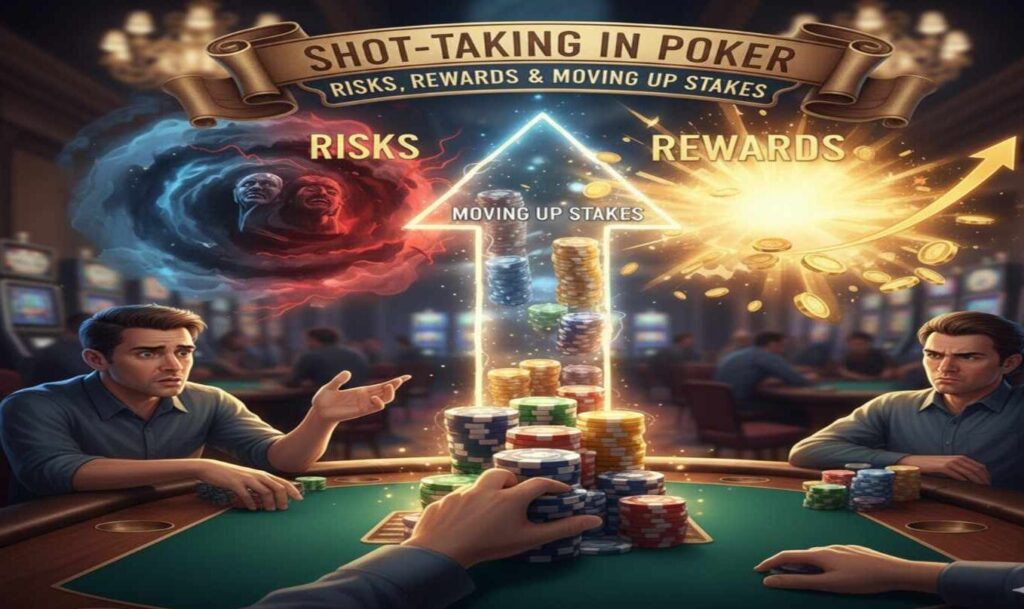
Imagine yourself strapping into the most daunting rollercoaster at the theme park. That’s shot- taking in poker for you, a ride where the highs reach the stratosphere, and the lows could delve into the deepest trenches. It’s a world where the faint-hearted are spectators, not participants. Think of it as the difference between a leisurely stroll in your neighborhood and deciding to scale Everest. The air is thinner, the risks greater, but oh, the view from up there!
Decoding Poker Jargon: The Anatomy of a “Shot”
In poker, “taking a shot” is like a boxer daring to punch above their weight class. It’s stepping into a higher-stakes game, where the blinds don’t just nibble but chomp down hard on your usual comfort zone. It’s a transition from the familiar territory into uncharted waters, where the sharks don’t just circle; they rule. You’re no longer in the cozy, predictable realm of Kansas, Toto. This is the big league, where every move is a gamble, and every gamble is a story.
Many serious grinders reduce unnecessary risk by using trusted poker club lists to scout game quality before taking their first shot at bigger stakes.
Why Embark on this Daredevil Poker Adventure?
The Thrill Factor : In the monotonous ebb and flow of everyday life, taking a shot at higher stakes adds a sprinkle of excitement, it’s the hot sauce on your otherwise bland daily dish. It’s about breaking the routine, stepping out of the shadows, and into the spotlight, however briefly.
Testing Your Mettle : Here’s where you truly gauge your poker prowess. Can you hold your own when the stakes are not just numbers, but significant figures? It’s a test of skill, nerve, and strategy. You’re not just playing the cards; you’re playing history, tradition, and sometimes, pure gut instinct.
Bankroll Acceleration : When successful, shot-taking can turbo-charge your bankroll. It’s akin to finding a warp zone in a video game, catapulting you leagues ahead of the slow and steady grind. It’s a high-risk, high-reward strategy that can either write you into the annals of poker legends or serve as a humble (and sometimes humbling) chapter in your poker journey.
The Art of Calculated Risk: A Symphony of Strategy and Timing
Shot-taking in poker isn’t just a wild leap into the abyss; it’s a calculated risk. It’s about reading the room, understanding the stakes, and knowing when to hold ’em and when to fold ’em. It’s a symphony where timing, skill, and a dash of luck play the crucial melodies.
Timing Your Shot: The Poker Player’s Checklist
Bankroll Readiness: The Financial Safety Net : Just as a trapeze artist wouldn’t dare perform without a safety net, entering higher stakes without a robust bankroll is a no-go. It’s like heading into a storm without a raincoat. Your bankroll should be sturdy enough to absorb shocks, think of it as your financial armor in the battlefield of high-stakes poker.
Emotional Stability: The Zen Master Approach : The calmness of a monk isn’t just a cliché here; it’s a necessity. If your nerves resemble a string about to snap, it’s a red flag. Emotional resilience in poker is like having an unshakeable anchor in choppy seas, it keeps you steady, focused, and rational.
Consistent Performance: The Benchmark of Excellence : Before you leap, ensure you’re not just good, but consistently good. It’s like a sprinter who doesn’t just beat their personal best once, but does it race after race. Your performance at your current level should not just sparkle occasionally; it should shine consistently.
Strategies for Shot-Taking Success
In-Depth Research: Your Tactical Playbook : Approach the new stakes with the diligence of a scholar. It’s akin to preparing for a championship bout where every detail counts. Study the tendencies, patterns, and strategies of the players at this level. It’s like being a detective, where every clue leads you closer to cracking the case.
Ego Check: Balancing Confidence with Caution : Confidence is your ally, but overconfidence is your foe. It’s a fine line, like walking a tightrope. Keep your ego in check, much like how a skilled driver controls their speed on a slippery road, cautious yet assertive.
Defined Exit Strategy: Your Emergency Escape Plan : Establish a clear stop-loss limit. This isn’t defeatism; it’s smart strategy. Think of it as an emergency brake in a high-speed race. It’s there to prevent a spinout, allowing you to regain control and drive another day
Enhancing Your Mental Game: The Inner Poker Warrior
Mastering your mental game in poker is akin to a warrior preparing for battle. It’s not just about the physical prowess; it’s the mental agility that often decides the victor.
Overcoming Fear and Doubt : Imagine fear as a persistent backseat driver, constantly offering unsolicited advice. Acknowledge its presence, but don’t hand over the steering wheel. Fear in poker is natural, but letting it dominate your decisions is like allowing that backseat driver to navigate, rarely does it lead to the best destination. It’s about striking a balance between caution and courage, ensuring that fear sharpens rather than dulls your game.
Bankroll Management Essentials : Treat your bankroll with the meticulousness of a CEO managing a Fortune 500 company’s finances. It’s not merely a pile of chips or numbers in an account; it’s the lifeblood of your poker career. Managing your bankroll requires a blend of discipline, foresight, and a keen understanding of risk versus reward. It’s a balancing act between aggression and conservation, ensuring the longevity and health of your financial base in the volatile world of poker.
Dealing with Losses: The Learning Curve
Losses in poker are inevitable, much like a scientist encountering numerous failed experiment before a major breakthrough. Each loss is a stepping stone, an opportunity to refine your strategy, understand your weaknesses, and build resilience. Accepting losses is not admitting defeat; it’s an integral part of your growth trajectory. It’s about extracting lessons from each setback, turning losses into learning experiences.
Knowing When to Fold: The Art of Retreat
In poker, as in life, the art of retreat is as critical as the art of advance. Recognizing when to step back, fold a hand, or leave a table is a skill that separates the seasoned players from the novices. It’s akin to a skilled captain navigating turbulent seas; knowing when to sail through and when to seek shelter is vital for survival. Folding at the right time is not a sign of weakness; it’s a strategic move, a display of wisdom and understanding of the bigger picture.
The Shot-Taking Odyssey
Embarking on the shot-taking journey in poker is about embracing the challenges, pushing your limits, and stepping out of your comfort zone. It’s a path fraught with risks and laden with rewards, each step shaping you into a more seasoned, savvy, and resilient player. In the grand theater of poker, shot-taking is your moment in the spotlight. It’s an opportunity to test your mettle, showcase your skills, and write your own poker saga. Make it count, play it smart, and let every move reflect the culmination of your experience, wisdom, and courage.
Looking for up to date poker content? Find new poker clubs, poker blogs, live poker streams and much more. Visit us now at Bluffingmonkeys.com to learn more.
Frequently Asked Questions (FAQs) – Shot-Taking in Poker
1. What does shot-taking mean in poker?
Shot-taking in poker refers to temporarily playing at a higher stake than your usual level, despite not yet having a full bankroll for that stake. The goal is to test yourself, capitalize on a good run, or accelerate bankroll growth while accepting increased risk.
2. When should a poker player consider taking a shot?
A player should consider taking a shot when they are consistently winning at their current stake, are emotionally stable, and have a bankroll buffer that can absorb potential losses without impacting their core grind. Timing matters more than ambition.
3. How much bankroll should I have before shot-taking?
There is no single rule, but a common guideline is to take a shot with a small, predefined portion of your bankroll often 5–10 buy-ins allocated specifically for the higher stake. If those buy-ins are lost, you move back down immediately.
4. Is shot-taking only for advanced poker players?
No, but it is not for beginners. Shot-taking is best suited for players who already understand variance, bankroll management, and emotional control. Without these fundamentals, shot-taking becomes gambling rather than strategy.
5. What are the biggest risks of shot-taking?
The primary risks include rapid bankroll loss, emotional tilt, and loss of confidence Poorly . planned shots can undo months of disciplined grinding. This is why having strict stop-loss rules and an exit plan is essential.