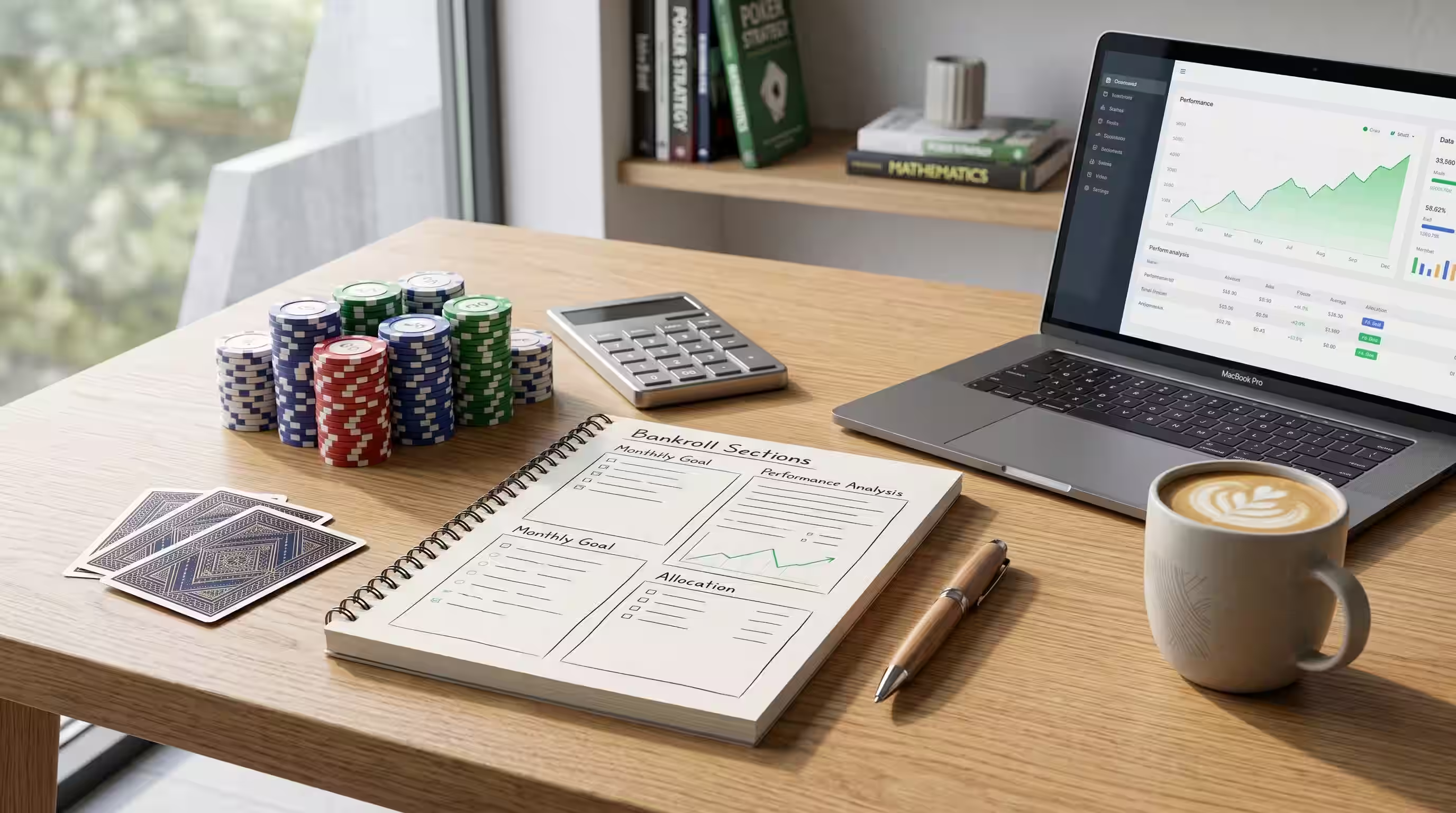
Bankroll management in poker is one of the most important skills in the game, yet it is still one of the most ignored.
That sounds strange at first.
Players spend hours studying ranges, c-bets, turn play, and solver outputs. They debate thin value, bluff frequencies, and exploitative adjustments. Then many of them sit in games their bankroll cannot really support.
That is how good strategy gets wasted.
Bankroll management in poker is not just about avoiding disaster. It is about giving your skill enough room to survive variance, stay emotionally stable, and actually show up over the long run.
That is the real point.
What Bankroll Management in Poker Actually Means
Bankroll management is the process of choosing stakes and formats that your poker funds can realistically support.
It is not just “having money.”
It is about having enough money set aside for poker that normal variance does not destroy your ability to keep playing well. In other words, bankroll management is what turns poker from random financial stress into a structured long-term game.
That is why serious players treat it as part of strategy, not as a side issue.
Why So Many Players Get It Wrong
Most bankroll mistakes come from one of three problems:
- players underestimate variance
- players overestimate their edge
- players use emotion instead of structure to choose stakes
This is why bankroll mistakes often happen to players who are not clueless at all. They may understand the game technically. They may even be solid winners. But they still think something like:
“I am better than this pool, so I can take the shot.”
Maybe.
But being better than the pool is not the same as being protected from variance.
That is the part many players keep learning the hard way.
Why Skill Does Not Replace Bankroll Discipline
This is one of the most dangerous myths in poker.
Players often think strong skill protects them from bankroll problems. It does not.
Skill helps you win in the long run. Bankroll management helps you survive long enough to reach that long run.
Those are not the same thing.
A strong player with weak bankroll discipline can still go broke. A weaker player with solid bankroll discipline may survive longer than expected simply because they are not putting themselves in positions where normal downswings destroy them immediately.
This is also why small edges create big results over time. Long-term poker profit only compounds when your bankroll structure gives you enough time for that edge to matter.
Cash Games and Tournaments Need Different Bankroll Rules
This is where many players oversimplify the topic.
Not all bankroll management in poker should look the same.
Cash games usually have lower variance than tournaments, which means they often require fewer buy-ins relative to the same edge. Tournaments are much swingier because the payout structure is top-heavy, field sizes vary, and long stretches without meaningful scores are completely normal.
That means bankroll rules for MTTs need to be much more conservative.
A player who can survive reasonably with one bankroll structure in cash games may be dangerously under-rolled in tournaments without realizing it.
A Good Cash Game Bankroll Is Usually More Conservative Than Players Want
A lot of cash-game players think in terms of confidence rather than protection.
They want to believe 10 buy-ins is enough. Sometimes even 5.
That is usually not discipline. That is impatience.
For most serious cash-game players, a safer bankroll structure usually means having enough full buy-ins to survive standard losing stretches without being forced to move down emotionally. The exact number depends on how tough the games are, how big your edge is, and how aggressively you are willing to manage stake movement.
But the deeper principle is simple: if a normal downswing can wipe you out, your bankroll is too small.
Tournament Bankroll Management Needs More Respect
This is where players get punished hardest.
Tournaments feel exciting, so players underestimate how brutal the swings can be. Even strong MTT players can go long stretches without a big score. That is not bad luck in some exceptional sense. That is tournament poker.
So if you play tournaments seriously, your bankroll needs more room.
A player with a solid edge can still suffer long periods of pain because tournament variance is heavy by nature. That is one reason tournament strategy and bankroll management need to be discussed together. One tells you how to maximize deep runs. The other makes sure normal dry stretches do not destroy you before the next one happens.
What “Taking a Shot” Should Actually Mean
Players love the idea of taking a shot.
The problem is that most of them define it badly.
A good shot is not just “playing bigger because you feel good today.” A good shot has structure. It has rules. It has a stop point. It does not turn one exciting session into a financial identity crisis.
If you are going to move up, the move should be controlled enough that losing does not damage your entire bankroll. Otherwise it is not really a shot. It is just gambling with a better story around it.

Moving Down Is a Skill, Not an Embarrassment
This is one of the most emotionally difficult parts of bankroll management.
Many players can accept the idea of moving up. They hate the idea of moving down.
That is ego talking.
Moving down is not failure. It is part of proper bankroll strategy. In fact, players who move down correctly often preserve their long-term future far better than players who stay too high out of pride.
The truth is simple: protecting your bankroll is more important than protecting your self-image.
Why Bankroll Management Protects More Than Just Money
This is a big part of the topic that players underestimate.
Bankroll management does not only protect your funds. It protects your decisions.
When you are under-rolled, every pot starts carrying too much emotional weight. You stop thinking clearly. You avoid good bluffs because the money feels heavy. You call too much because folding feels painful. You fear normal variance because your bankroll is too fragile to absorb it.
That is where technical poker starts to collapse into emotional poker.
This is also why mental fitness in modern poker matters so much. A stable bankroll makes better thinking easier. A weak bankroll makes bad thinking easier.
Online Poker Makes Bankroll Discipline Even More Important
Online poker compresses volume.
You see more hands, more tournaments, more coolers, and more ugly runs in a shorter period of time. That makes bankroll pressure arrive faster. A player who survives emotionally in live poker can feel overwhelmed online simply because the speed of variance is much higher.
That is one reason online poker in 2026 feels different. The environment is faster, more fluid, and more punishing when your financial structure is weak.
If your bankroll plan was lazy before, online poker will expose it much faster than live poker ever did.
Bankroll Management Is Not One Number
This is another mistake players make.
They want one perfect rule. One magical number of buy-ins that solves everything.
Poker is not that tidy.
Good bankroll management depends on:
- format
- field size
- edge
- game toughness
- stakes flexibility
- emotional stability
A high-volume professional, a recreational weekend MTT player, and a strong small-stakes cash grinder should not all manage their bankroll the same way.
The right question is not “What is the one rule?” The right question is “How much volatility does my format create, and how much room do I need to survive it realistically?”
Why “I’ll Reload If I Bust” Is Not Real Bankroll Strategy
Some players try to escape the whole topic with this logic.
They say they do not need strict bankroll management because they can always redeposit, rebuy from outside income, or reload later.
That is not the same thing as bankroll management.
Maybe it reduces the chance of permanent ruin. It does not reduce the chance of making bad strategic choices under pressure. And it does not create the discipline that serious poker usually requires.
It also hides how profitable or unprofitable your actual poker is.
How to Build Better Bankroll Habits
- Separate poker money from life money: Once those mix, clarity disappears.
- Use format-specific rules: Cash and MTTs do not behave the same way.
- Have clear move-up and move-down points: Do not improvise them emotionally.
- Track results honestly: Bankroll discipline gets weaker when records get vague.
- Respect your own mindset: If swings hit you hard emotionally, you need more protection, not less.
What Strong Players Usually Understand Better
Strong players do not see bankroll management as a boring extra.
They understand that it protects everything else.
It protects study effort. It protects confidence. It protects long-term edge. It protects emotional control during ugly stretches. It gives skill time to matter.
That is why bankroll management in poker is not separate from strategy.
It is one of the quiet systems that makes strategy usable.
If You Remember One Thing
Bankroll management in poker is not about fear. It is about giving variance enough space that your actual skill can survive long enough to matter.
That is the real lesson.
The players who ignore bankroll discipline usually blame bad luck later. The players who respect it give themselves a real chance to last.
FAQ: Bankroll Management in Poker
What is bankroll management in poker?
Bankroll management in poker is the practice of choosing stakes and formats that your poker funds can realistically support over time.
Why is bankroll management important in poker?
It is important because variance can destroy even good players if they are playing too high for their bankroll.
Do cash games and tournaments need the same bankroll strategy?
No. Tournaments usually need more conservative bankroll rules because they are much swingier than cash games.
Is moving down in stakes a bad sign?
No. Moving down is often a smart bankroll decision that protects your long-term ability to keep playing well.
Can a strong player still go broke with bad bankroll management?
Yes. Skill helps you win in the long run, but bankroll management helps you survive long enough for that skill to matter.