
“Is online poker rigged?” is still one of the most searched and most emotional questions in poker.
And in 2026, the question is not going away.
That is not because players suddenly became irrational. It is because online poker creates the perfect environment for suspicion. The game is faster, the bad beats feel more concentrated, and the screen removes the physical comfort of watching real cards come out from a real dealer.
That combination is powerful.
The truth is that regulated online poker is not “rigged” in the way many frustrated players imagine, but that does not mean every concern is fake. What many players call rigged is usually a mix of variance, speed, memory bias, and confusion about what real integrity threats actually look like.
That is the real conversation.
Why This Question Still Feels So Convincing
The belief that online poker is rigged survives because it feels emotionally logical.
You get it in with aces. The board runs out badly. Then it happens again later. Then you see another ugly beat at another table. The brain does not file those moments as variance. It files them as evidence.
That is where the problem starts.
Poker players do not experience randomness in a neutral way. They remember the painful runouts, the two-outers, the river suckouts, and the spots where “the site always seems to get there.” They do not remember the normal hands with the same intensity.
That memory imbalance is one of the biggest reasons the myth survives.
Online Poker Feels More Rigged Because It Is Much Faster
This is the most important point in the whole discussion.
Online poker deals far more hands per hour than live poker. A typical live table might give you around 25 to 30 hands per hour, while online tables can deal far more, and multi-tabling pushes that number even higher.
That changes your experience of variance completely.
You do not just see more bad beats online. You see more of everything online. More coolers. More suckouts. More dominated hands getting there. More set-over-set spots. More impossible-looking runouts.
The events are not necessarily less fair.
You are just compressing far more poker into less time.
That is one reason online poker in 2026 feels so different from older poker models. Speed changes perception even before it changes strategy.
Why “Rigged” Is Usually the Wrong Word
When most players say online poker is rigged, they usually mean one of four things:
- they are seeing too many bad beats
- the cards feel too action-heavy
- their losses feel too concentrated
- they think the software is somehow favoring drama
That is understandable.
But it is usually still the wrong diagnosis.
On licensed sites, the core card distribution is based on random number generation and outside testing. That does not mean every player is wrong to worry about integrity. It means the classic “the deck is fixed” story is usually aimed at the wrong target.
The more useful question is not “is the deck rigged?” but “what real threats to fairness actually exist?”
The Real Integrity Problems Are Different
This is where the conversation gets smarter.
There are real integrity concerns in online poker. They just are not usually the fantasy version players imagine.
The bigger modern concerns are:
- bots
- real-time assistance (RTA)
- collusion
- account abuse
These are not the same thing as saying the site is rigged.
They are much more specific, and in many ways more serious, because they involve unfair player behavior rather than magical deck control. That distinction matters. A player losing to a bot or coordinated team may describe the experience as rigged, but the underlying problem is different.
That is why poker integrity in 2026 is a more nuanced topic than it used to be.
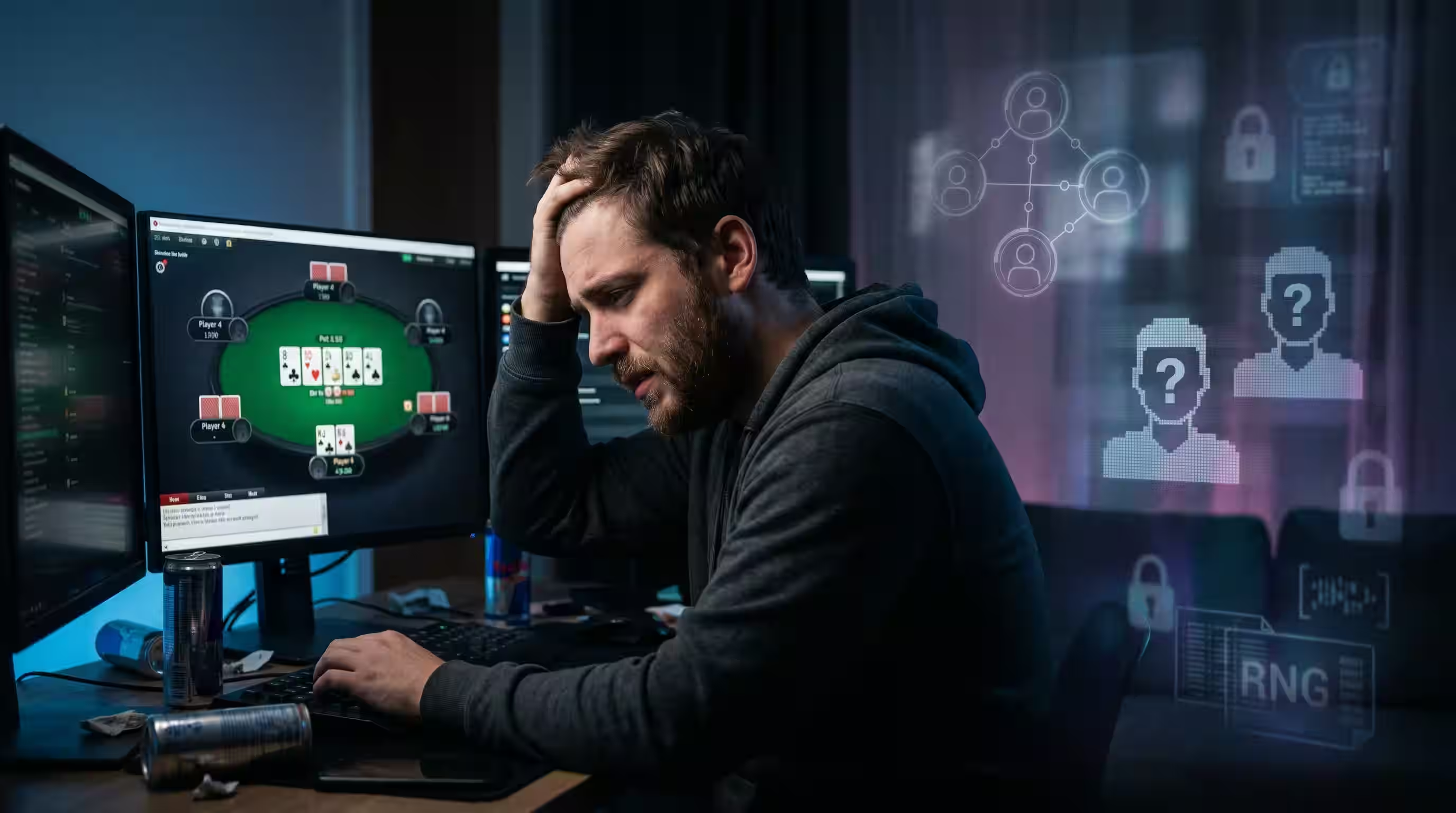
Why Players Still Misread Variance in 2026
Even with more education, more tools, and more poker content than ever, many players still misread variance badly.
Why? Because variance does not feel mathematical when it is happening to you.
It feels personal.
That gets even worse online because of volume. A stretch of ugly runouts that might take months to experience live can happen much faster online. The shorter timeline makes the pain feel less random and more targeted.
This is where bankroll psychology, tilt, and pattern-seeking all start feeding the same belief.
Once a player starts expecting proof that the site is unfair, every painful hand becomes part of that story.
The Brain Loves Patterns, Even Fake Ones
This is one of the hidden reasons the myth survives.
Humans are excellent at finding patterns and terrible at staying calm when randomness feels hostile. Poker is the perfect storm for that weakness.
If a player gets kings cracked twice, loses with aces, and sees three rivered flushes in one session, the session starts to feel designed. That is not because the cards are rigged. It is because the brain is building a story out of emotionally heavy moments.
Poker myths survive because they are emotionally satisfying. They explain pain faster than math does.
This is also why the myth “online poker is rigged” keeps appearing in broader poker myth discussions. It is one of the most sticky beliefs in the whole game.
Anonymous Pools Make the Feeling Even Stronger
Anonymous and fast-moving online environments can make suspicion worse.
Why? Because when identities disappear, players lose some of the normal ways they explain what is happening. They cannot build long personal histories with opponents as easily. They cannot say, “this guy always gets there” in the same grounded way. So the blame shifts upward toward the app, the site, or the software itself.
That is one reason anonymous online poker pools change everything. They do not only change strategy. They also change how players emotionally interpret what happens to them.
Population Mistakes Matter More Than Hero Conspiracies
Strong online players usually do not spend their time asking whether the site is out to get them.
They ask better questions.
They ask:
- is this pool under-bluffing rivers?
- does this format overfold to small turn bets?
- are players defending too wide preflop?
- is this anonymous pool making the same mistakes repeatedly?
That is a much more profitable mindset.
And it is why population reads matter more than hero reads in online poker. Players who stay focused on pool behavior improve faster than players who keep trying to solve their pain with conspiracy.
Why Regulated Sites Have Little Incentive to Rig Games
This is another point many players ignore.
A regulated poker operator does not need to rig the deck to make money. The site already earns through rake or tournament fees regardless of who wins the pot.
That matters because the conspiracy theory assumes an incentive that often is not there.
If anything, major sites have every reason to protect trust, not destroy it. Once players stop trusting the game, the business itself gets weaker.
That does not prove perfection. It does make the classic “the site is secretly juicing action cards” theory much less convincing than frustrated players want it to be.
What 2026 Has Actually Changed
The reason this topic still matters in 2026 is not that the rigged question finally became true.
It is that online poker’s real integrity issues became more sophisticated.
Players now worry less only about random decks and more about whether the environment is being compromised by non-human play, software assistance, coordinated teams, or weak enforcement. That is a more serious conversation than old-school bad-beat paranoia.
In other words, the old myth survives, but the real battlefield changed.
So Is Online Poker Rigged?
If by rigged you mean that regulated sites are secretly arranging decks to create drama, the answer is no.
If by rigged you mean that online poker can contain real fairness threats, then the smarter answer is yes, but those threats usually look like bots, RTA, collusion, and other forms of abuse, not magical card manipulation.
That distinction matters because it changes how players should respond.
Bad-beat paranoia makes people emotional. Understanding real integrity threats makes people more informed.
What Smart Players Do Instead of Obsessing Over the Myth
Strong players do a few things differently:
- they accept variance faster
- they study population patterns instead of building conspiracy stories
- they protect their mindset during ugly runs
- they care about real integrity issues without confusing them with fixed-deck fantasies
That mindset is healthier and more profitable.
It is also why mental fitness in modern poker matters so much. A lot of rigged talk is really pain, frustration, and cognitive bias wearing a poker costume.
If You Remember One Thing
Online poker is not “rigged” in the simple way many angry players imagine, but the reason people still believe it in 2026 is easy to understand: the game is faster, variance feels harsher, memory is biased toward pain, and real integrity threats are often confused with fixed-deck fantasies.
That is the real answer.
The myth survives because it feels emotionally satisfying.
The truth is less dramatic, but much more useful.
FAQ: Is Online Poker Rigged?
Is online poker rigged in 2026?
No, not in the usual sense people mean. Regulated online poker sites use random number generators and independent testing, but players still confuse fast variance and real integrity concerns with the idea of fixed decks.
Why do bad beats feel worse online than live?
Because online poker deals many more hands per hour, and multi-tabling makes variance show up much faster and more intensely than live poker.
Why do so many players still think online poker is rigged?
Because painful runouts are memorable, the game moves faster online, and the brain naturally turns repeated frustration into a story about unfairness.
What are the real fairness threats in online poker?
The biggest real threats are bots, real-time assistance, collusion, and account abuse rather than secret deck manipulation.
How should players think about the rigged debate more intelligently?
Players should separate variance from true integrity issues, study pool tendencies, and focus more on evidence-based threats than on emotional bad-beat theories.