Most poker players think anonymity only removes table talk and player notes.
That is not even close to the full effect.
Anonymous online poker pools change everything because they remove long-term player-specific information and force strategy back toward cleaner baselines, sharper population reads, and more disciplined decision-making.
That is the real shift.
Once names disappear, the game stops rewarding many of the habits players rely on in regular online pools. You cannot build long-term reads the same way. You cannot hunt specific weak opponents as easily. You cannot protect a table image over time. You cannot lean on HUD-style comfort, repeated tendencies, or emotional history against one opponent.
All of that changes the strategy.
And many players do not adjust enough.
What Anonymous Online Poker Pools Actually Change
Anonymous pools do not just hide identities. They change the information structure of the game.
That means several things happen at once:
- player-specific reads become weaker
- long-term notes become less useful or disappear completely
- image-based leveling battles happen less often
- table selection becomes less powerful
- population tendencies become more important than individual history
This matters because a lot of modern online poker strategy depends on accumulated information. When that information is removed, many players keep playing as if they still have it.
That is a mistake.
Why Population Reads Matter More Than Individual Reads
In regular online games, you can often say things like:
- this player overfolds to turn barrels
- this reg defends too wide in the big blind
- this player never raises rivers without the nuts
In anonymous online poker pools, those reads become much less reliable because the next hand may as well be against a new person.
So the strategic center shifts.
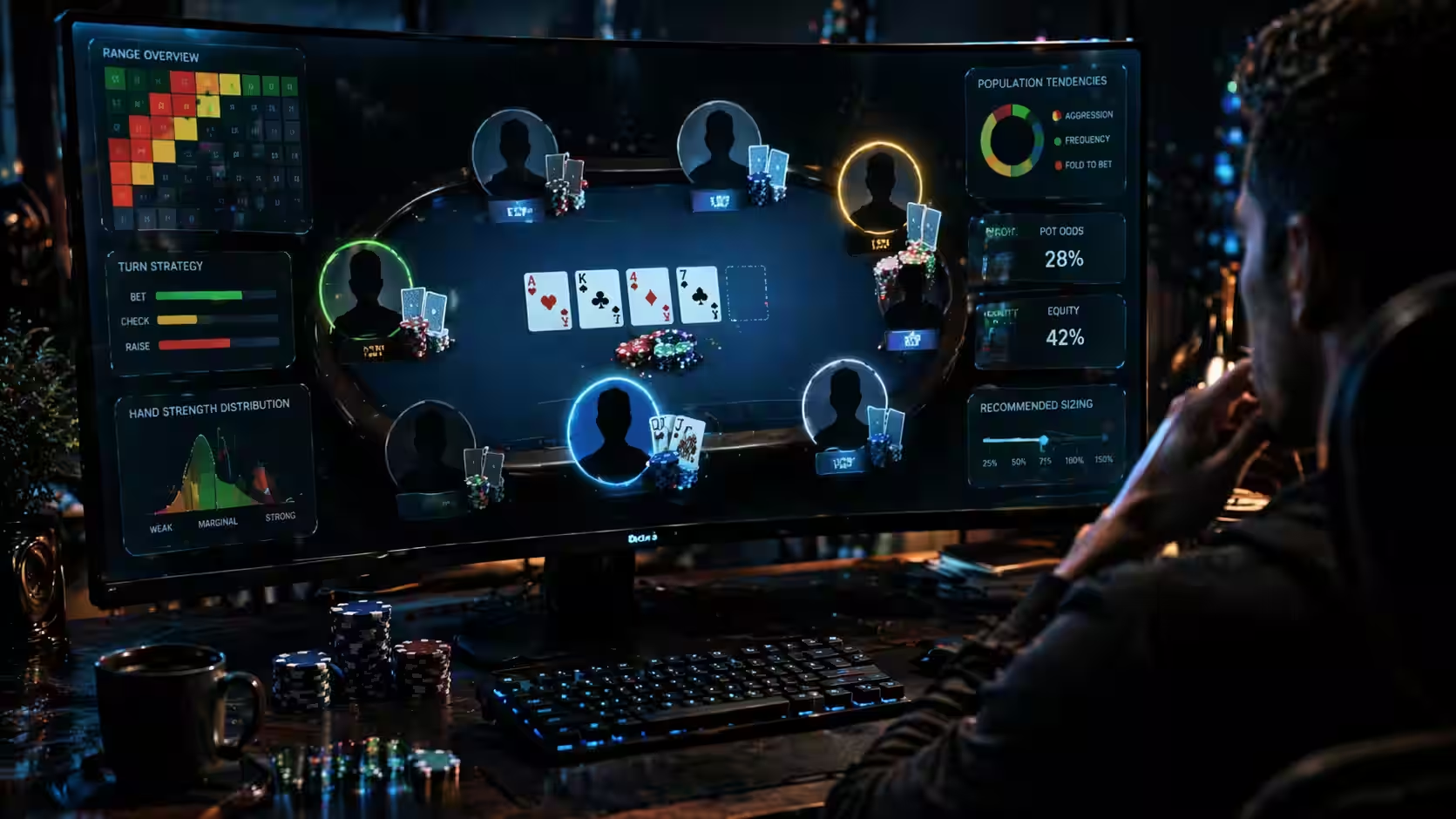
You stop asking, “What does this exact player usually do?” and start asking, “What does this pool usually do here?”
That is a different kind of poker.
It is often more disciplined, more statistical in feel, and less emotional. You are no longer exploiting one face. You are exploiting the average mistakes of the environment.
That is one reason strategy in anonymous pools feels colder, but also cleaner.
Why Bluffing Changes So Much in Anonymous Pools
Bluffing is one of the first things that changes when the pool becomes anonymous.
In non-anonymous games, some bluffs work because of accumulated image. Maybe you have looked tight for an hour. Maybe an opponent thinks you underbluff. Maybe they are scared of your reputation.
In anonymous pools, a lot of that disappears.
Now your bluff has to stand more on its own structural strength:
- Does your line make sense?
- Does the board support your story?
- Does the pool overfold in this node?
- Is your sizing actually credible?
This makes bluffing more honest.
It also punishes players who bluff because they feel clever rather than because the spot is good. That is why understanding the best bluffing spots that actually work matters even more in anonymous online poker.
Value Betting Gets Better When Guesswork Gets Smaller
A lot of players become too fancy in anonymous pools.
They assume the lack of reads means they should become hyper-balanced and endlessly cautious. In many spots, the better answer is much simpler: value bet well and stop overcomplicating things.
Anonymous pools often reward players who value bet accurately because a large part of the pool is still making standard mistakes with bluff-catchers, one-pair hands, and capped ranges.
You do not need to win every pot by outleveling people.
You need to keep finding where worse hands continue too often.
That is one reason thin value bets make more money than big bluffs. And in anonymous pools, that truth often becomes even more obvious.
Why Table Image Matters Less Than Players Think
Many online players are addicted to image warfare.
They think in terms of:
- “I have been aggressive lately.”
- “He thinks I am out of line.”
- “I showed a bluff earlier, so now I get paid.”
That logic weakens fast in anonymous pools.
Why? Because repetition is less stable and identity has less weight. Even when you face the same player again, the environment feels less personal, less sticky, and less history-dependent.
So if your entire strategy relies on being noticed, you lose part of your edge immediately.
That is not bad news. It just means your decisions need stronger foundations than table theater.
Preflop Leaks Become Easier to Punish
Anonymous pools often make preflop mistakes more visible at the population level.
You may not know exactly who is overdefending, but you can often see that the pool as a whole:
- defends too wide in some positions
- calls too many opens from the blinds
- misplays certain 3-bet pot structures
- continues too loosely because decisions feel less personal and more automatic
That creates a different kind of exploit.
You are no longer targeting one known caller. You are targeting a pool tendency that shows up again and again. This is one reason knowing how to exploit wide preflop defense becomes so valuable online.
Anonymous environments do not remove leaks. They often make them more systematic.
Auto-Pilot Gets Punished Harder Than People Expect
Anonymous pools create a strange psychological trap.
Because the games feel less personal, many players relax too much. They stop paying attention to the exact board. They stop adjusting by position and texture. They start clicking through hands with a generic strategy.
That is dangerous.
Anonymous poker rewards players who stay mentally switched on while everyone else becomes mechanical. If the pool is running on habits, the player who keeps thinking clearly gains an edge every orbit.
This is especially true in fast online environments where volume is high and the temptation to drift into automatic play is constant.
Turn Play Gets More Important, Not Less
Many players think anonymity simplifies poker into preflop and flop decisions.
It does not.
If anything, it makes turn play even more important because the turn is where population mistakes often become clearer than individual reads ever were.
In anonymous pools, the turn is often where you see:
- under-bluffing in tough nodes
- overfolding after loose flop continues
- weak protection bets with medium-strength hands
- capped ranges that do not defend enough
That is why turn play is the most neglected street in poker. It becomes the place where disciplined players separate themselves from automatic ones.
Small Bet Sizes Become More Useful in Anonymous Pools
When you do not have rich player-specific history, efficient sizing becomes even more important.
You need bet sizes that accomplish clear jobs without relying on image or reputation.
That is where small bets shine.
A smaller sizing can:
- pressure wide ranges efficiently
- deny equity without overcommitting
- keep weaker hands in for value
- let you bet more of your range on favorable textures
In anonymous pools, those benefits matter a lot because they are less dependent on who the villain is and more dependent on what the pool tends to do. That is exactly why small bet sizes are more powerful than most players think.
Solver Knowledge Helps, but Only If You Use It Correctly
Anonymous online poker looks like the perfect place to become robotic.
That is where many players go wrong.
They assume anonymity means they should copy solver baselines blindly and stop thinking. But anonymous pools are still real pools. Real pools still overfold, underbluff, overcall, and misplay entire classes of hands.
So theory still matters, but not as an excuse.
You need strong baseline knowledge because you have fewer player-specific reads. At the same time, you still need the freedom to adjust when the pool shows clear patterns.
That is why using GTO as an excuse to avoid thinking is such a dangerous habit online. Anonymous pools reward structured thought, not mindless imitation.
Hand Reading Changes Form in Anonymous Poker
You still hand read in anonymous pools.
You just do it differently.
Instead of building a profile-rich story around one opponent, you build a cleaner range-based story around the line itself. You focus more on position, board interaction, pool tendencies, and likely construction errors.
This makes your hand reading more abstract, but often more reliable.
You are reading ranges with less emotional noise.
That is why strong hand reading techniques in poker remain crucial even when names disappear.
Mental Discipline Matters More in Anonymous Pools
One of the hidden effects of anonymous online poker is that it can feel emotionally flatter.
That sounds good at first, but it can create its own problems.
When players feel less social friction, less rivalry, and less identity at the table, they sometimes drift into looser discipline. Sessions become blurrier. Tilt becomes quieter but more repetitive. Mistakes feel less dramatic, so they repeat more easily.
That is why anonymous pools often reward players with better routines and stronger emotional control.
If the game feels less personal, your discipline has to become more personal.
This is exactly where mental fitness in modern poker becomes a strategic edge, not just a mindset topic.
What Strong Players Do Better in Anonymous Online Poker Pools
Strong players do not complain that the pool is anonymous.
They adapt faster.
They usually do a few things better than average players:
- they rely more on population reads than ego battles
- they value bet more confidently in standard overcall nodes
- they bluff with stronger structural logic
- they keep preflop ranges cleaner
- they stay more focused when the game starts to feel automatic
That is the real difference.
Anonymous pools do not remove edge. They redistribute it.
They take edge away from players who rely on noise and give more of it to players who can think clearly without needing personal history to guide every decision.
If You Remember One Thing
Anonymous online poker pools change everything because they shift the game away from identity and toward structure.
That means less reliance on image, fewer personal reads, more population-based decisions, and a greater reward for discipline, value accuracy, and clean strategic thinking.
Players who do not adjust keep playing yesterday’s online poker in today’s environment.
Players who do adjust usually find that anonymous pools are not less strategic.
They are just strategic in a different way.
FAQ: Anonymous Online Poker Pools
What are anonymous online poker pools?
Anonymous online poker pools are games where player identities are hidden or less persistent, which reduces long-term reads, notes, and image-based strategy.
Why do anonymous online poker pools change strategy so much?
They change strategy because players have less player-specific information, so decisions shift more toward population tendencies, cleaner baselines, and stronger range-based thinking.
Are bluffs harder in anonymous online poker pools?
Not always harder, but they need stronger structural logic. Without reliable table image or history, bluffs must rely more on board texture, range pressure, and pool tendencies.
Do anonymous poker pools make GTO more important?
They often make solid baseline strategy more important, but they do not remove the need to think. Players still need to adjust when the pool shows clear recurring mistakes.
What is the biggest mistake players make in anonymous online poker pools?
The biggest mistake is failing to adapt. Many players keep relying on image, personal reads, or automatic habits instead of shifting toward population-based strategy and disciplined execution.