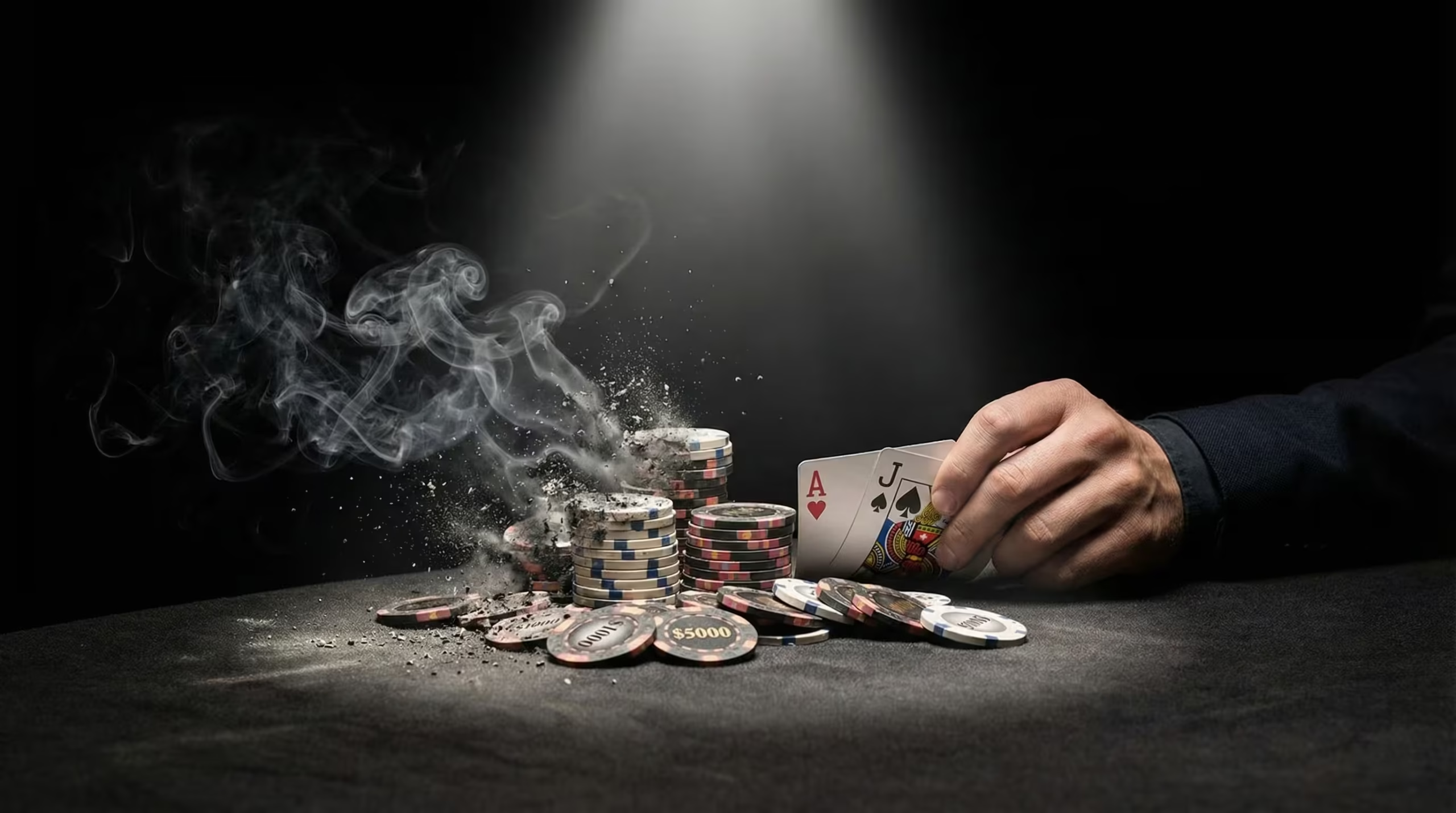
Introduction to Overrated Poker Hands
Many poker players fall into the trap of overvaluing certain starting hands, leading to costly mistakes and missed opportunities. Understanding which hands are statistically overrated can dramatically improve your win rate and decision-making at the tables.
Common Misconceptions About Starting Hands
Players frequently misjudge:
- Big unsuited cards: Hands like ATo and KJo look strong but often lead to trouble
- Low pocket pairs: Small pairs have limited post-flop potential
- Suited connectors: Hands like J9s are playable but overvalued by many
- Legendary hands: T2o (Doyle Brunson’s famous hand) is statistically terrible
As noted on Reddit, even premium hands like AK can be “wildly overrated” since they “tend to be kind of underwhelming at showdown.”
Why This Knowledge Matters
Recognizing overrated hands helps you:
- Avoid reverse implied odds situations
- Save money on marginal spots
- Focus on truly profitable opportunities
- Develop better hand selection discipline
BlackRain79 emphasizes that folding these overrated hands is crucial, stating they’re “not worth putting more chips into the pot than necessary.”
Expert Perspectives
Key insights from poker professionals:
- Reddit players highlight AK’s overrated nature despite its preflop strength
- BlackRain79 identifies J9s, ATo, KJo, and small pairs as particularly overvalued
- Statistical analysis shows hands like T2o have “almost no winning potential”
Whether playing at poker clubs or online, understanding these concepts will help you avoid common pitfalls and make more profitable decisions from the very first deal.
Ace King (AK): The Most Overrated Starting Hand?
While Ace-King is undoubtedly one of poker’s strongest starting hands, many players overvalue its post-flop potential. Understanding AK’s limitations can help you avoid costly mistakes and maximize its true value.
Why AK Is Considered Overrated
Despite its preflop dominance, AK often disappoints because:
- It’s a drawing hand: Only connects with the flop about 1/3 of the time
- Showdown weakness: Missed flops leave you with just ace-high
- Value extraction difficulty: Opponents often fold when you hit
- Reverse implied odds: Can lose big pots when dominated by AA/KK
As noted on Reddit, AK “has a lot of preflop value but tends to be kind of underwhelming at showdown and can be hard to get paid with.”
When AK Underperforms
AK struggles most in these scenarios:
| Situation | Problem |
|---|---|
| Multi-way pots | Reduced equity against multiple opponents |
| Deep stack play | Higher risk of big losses when dominated |
| Against tight opponents | Hard to get action when you hit |
| Short-handed games | More frequent marginal decisions |
Expert Perspectives on AK
Professional insights reveal:
- Reddit players call AK “wildly overrated” despite its preflop strength
- BlackRain79 notes similar issues with ATo, suggesting high-card hands often disappoint
- Statistical analysis shows AK wins about 65% of the time against random hands preflop
Playing AK More Effectively
Maximize AK’s value by:
- 3-betting aggressively preflop: Build pots when you have maximum equity
- C-betting selectively: Consider board texture and opponent tendencies
- Managing pot size: Avoid bloating pots when you miss
- Folding to aggression: When facing heavy resistance on scary boards
Remember that AK plays best in heads-up pots against loose opponents at poker clubs. Adjust your strategy based on game dynamics and opponent tendencies to extract maximum value from this powerful but often misunderstood hand.
Jack-Nine Suited: A Trap for Beginners
Jack-Nine suited (J9s) is a classic “trap hand” that looks more playable than it actually is. While the suitedness and connectivity appear attractive, this hand frequently gets beginners into trouble due to its hidden weaknesses.
Why Players Misplay J9s
J9s tempts players because:
- Suited advantage: Flush potential makes it seem stronger than offsuit variants
Straight potential: Appears to have good connectivity (can make straights from both ends)
- Middle-card illusion: Jack feels like a strong high card
- Showdown value: Can make decent pairs that feel worth playing
However, as BlackRain79 notes in his list of overrated hands, J9s often leads to difficult post-flop situations where players lose more money than they should.
The Reverse Implied Odds Problem
J9s suffers from severe reverse implied odds – situations where you stand to lose more money than you can potentially win:
| Situation | Problem |
|---|---|
| Flopping top pair (Jack) | Often dominated by AJ/KJ/QJ |
| Making a flush | Vulnerable to higher flushes |
| Hitting a straight | Can lose to higher straights |
| Middle pair | Hard to extract value or fold |
When to Fold J9s
Smart players fold J9s in these common situations:
- Early position: The hand doesn’t play well against multiple opponents
- Facing raises: Doesn’t have enough equity to call significant preflop aggression
- Against tight opponents: Won’t get paid when you hit your draws
- Short-handed games: Better hands available for aggression
As BlackRain79 emphasizes, disciplined folding of marginal hands like J9s leads to significant bankroll improvements over time. While it might be tempting to play this hand at poker clubs, the math shows it’s often a money-losing proposition.
Exceptions Where J9s Can Be Played
In very specific situations, J9s can be playable:
- Late position with no raises
- Against extremely loose opponents
- When deep-stacked and able to realize equity
- In steal situations from the button or cutoff
Even in these cases, proceed with caution and be prepared to fold when the hand doesn’t connect strongly with the flop.
Ace-Ten Offsuit: The Illusion of Strength
Ace-Ten offsuit (ATo) is a classic example of a hand that appears stronger than it actually is. While the ace gives it some preflop appeal, this hand frequently leads players into difficult postflop situations where they lose more money than they should.
Why Players Overvalue ATo
ATo tempts players because:
- Ace-high illusion: The ace makes it seem like a premium hand
- Middle-card potential: The ten feels like it could connect with boards
- Preflop playability: Appears strong enough to open or call raises
- Showdown value: Can make top pair that feels worth playing
However, as BlackRain79 identifies in his list of overrated hands, ATo often leads to reverse implied odds situations where you lose big pots when you’re dominated.
Comparison to Stronger Ace Hands
| Hand | Key Advantage | Win Rate vs Random Hand |
|---|---|---|
| Ace-King | Strongest non-pair hand, dominates more combos | ~67% |
| Ace-Queen | Still dominates many hands, better kicker | ~65% |
| Ace-Ten | Vulnerable to domination, weaker kicker | ~60% |
Common Pitfalls with ATo
Players lose money with ATo in these situations:
- Flopping top pair: When you hit an ace, you’re often dominated by AJ/AQ/AK
- Facing aggression: Difficult to continue when opponents show strength
- Kicker problems: Your ten kicker loses to higher kickers when ace-high boards come
- Multi-way pots: Equity drops significantly against multiple opponents
Real-Game Examples Where ATo Loses
Typical losing scenarios:
- You raise ATo preflop, flop comes A-7-2, and lose to AJ/AQ/AK
- You call a raise with ATo, flop comes T-8-3, and lose to KT/QT/JT
- You 3-bet ATo, get called, and face aggression on a K-Q-J board
As BlackRain79 notes, disciplined players avoid these situations by folding ATo in most circumstances, especially at poker clubs where opponents tend to play tighter ranges.
When ATo Can Be Played
In very specific situations, ATo might be playable:
- Late position with no raises
- Against extremely loose, passive opponents
- When short-stacked in tournaments
- In steal situations from the button
Even in these cases, proceed with caution and be prepared to fold when the hand doesn’t connect strongly with the flop or faces significant resistance.
King-Jack Offsuit: Overestimating Its Value
King-Jack offsuit (KJo) is a hand that frequently traps players into overvaluing its potential. While it looks playable at first glance, this hand often leads to difficult postflop decisions and costly mistakes.
Why Players Overplay KJo
KJo tempts players because:
- High-card illusion: The king makes it seem like a premium hand
- Connectivity potential: Appears to have straight possibilities
- Preflop playability: Feels strong enough to open or call raises
- Showdown value: Can make top pair that seems worth playing
However, as BlackRain79 identifies in his list of overrated hands, KJo often leads to reverse implied odds situations where you lose big pots when dominated by better king hands.
The Dangers of Top Pair with Weak Kickers
KJo’s biggest weakness is its vulnerability when you hit top pair:
| Situation | Problem |
|---|---|
| Flopping top pair (King) | Often dominated by AK/KQ/KT |
| Facing aggression | Difficult to continue when opponents show strength |
| Multi-way pots | Equity drops significantly against multiple opponents |
| Kicker problems | Your jack kicker loses to higher kickers on king-high boards |
Strategies to Avoid Costly Mistakes
To play KJo more effectively:
- Fold in early position: The hand doesn’t play well against multiple opponents
- Be cautious facing raises: Doesn’t have enough equity to call significant preflop aggression
- Play aggressively in position: When you do play it, take initiative to control the hand
- Fold to resistance: Be willing to let it go when facing strong action
As BlackRain79 notes, disciplined players avoid trouble spots by folding KJo in most circumstances, especially at poker clubs where opponents tend to play tighter ranges.
When KJo Might Be Playable
In very specific situations, KJo can be playable:
- Late position with no raises
- Against extremely loose, passive opponents
- When short-stacked in tournaments
- In steal situations from the button
Even in these cases, proceed with caution and be prepared to fold when the hand doesn’t connect strongly with the flop or faces significant resistance.
Pocket Twos: The Small Pocket Pair Dilemma
Pocket twos (22) represent one of poker’s most challenging starting hands. While they have the potential to flop a set, their limited upside and vulnerability make them a tricky hand to play profitably.
The Limited Upside of Small Pocket Pairs
Pocket twos suffer from several inherent weaknesses:
- Set-or-fold nature: Only flop a set about 12% of the time
- Vulnerability when unimproved: Easily beaten even when making a pair
- Reverse implied odds: Can lose big pots when opponents have higher sets
- Showdown weakness: Rarely win at showdown without improvement
As BlackRain79 notes in his list of overrated hands, small pocket pairs like 22 “are simply too weak to get involved in most circumstances.”
When to Play and When to Fold Pocket Twos
The playability of 22 depends largely on game dynamics:
| Situation | Action | Reason |
|---|---|---|
| Early position | Fold | Too vulnerable against multiple opponents |
| Late position | Open or call | Better chance to steal or see cheap flop |
| Facing raises | Fold (usually) | Not enough implied odds unless deep-stacked |
| Multi-way pots | Fold | Equity diminishes against multiple opponents |
Statistical Performance in Different Game Types
Pocket twos perform differently across game formats:
- Cash games: -0.5bb/100 (losing hand long-term for most players)
- Tournaments: More playable due to shallower stacks
- Heads-up: +1.2bb/100 (playable due to heads-up dynamics)
- 6-max: -1.0bb/100 (generally unprofitable)
The key to playing 22 profitably is understanding stack sizes and opponent tendencies. At poker clubs, where players often play tighter ranges, the hand becomes even more marginal.
Optimal Strategy for Pocket Twos
To maximize value from 22:
- Play for set value: Only continue when you flop a set
- Be positionally aware: Prefer late position opportunities
- Manage pot size: Keep pots small when unimproved
- Fold to aggression: Unless you’ve hit your set
- Consider stack depths: Need at least 15:1 implied odds to call preflop
Remember that while pocket twos can occasionally deliver big wins, they’re primarily a break-even hand at best for most players. Discipline in folding them in marginal spots will save you money in the long run.
T2 Offsuit: The Legend vs. Reality
Ten-Deuce offsuit (T2o) holds a unique place in poker history as the hand Doyle Brunson famously used to win two WSOP Main Events. However, this legendary status has led many players to dramatically overestimate its actual value in regular play.
The Doyle Brunson Legacy
In 1976 and 1977, poker legend Doyle “Texas Dolly” Brunson won back-to-back WSOP Main Events with T2o:
- 1976: Defeated Jesse Alto with a full house (10s full of 2s)
- 1977: Defeated Gary Berland with a straight (5-4-3-2-A)
- Cultural impact: Became known as the “Doyle Brunson hand”
These iconic wins created a romantic association with the hand that persists today, despite its objectively poor statistical performance.
Why T2 Offsuit Is Statistically Terrible
T2o ranks among the worst starting hands in poker because:
| Weakness | Impact |
|---|---|
| No straight potential | Can’t make a straight with just one gap |
| Weak high card | Ten is easily dominated by higher cards |
| No flush potential | Offsuit nature reduces flush possibilities |
| Reverse implied odds | Lose big when you hit a pair and are dominated |
As noted in poker strategy resources, T2o “is definitely not worth putting more chips into the pot than necessary.”
The Dangers of Nostalgic Play
Many players fall into these traps with T2o:
- Hero complex: Trying to emulate Brunson’s legendary plays
- Showmanship: Playing the hand to impress others at the table
- Confirmation bias: Remembering wins while forgetting losses
- Selective memory: Focusing on the two famous wins while ignoring thousands of losing hands
At poker clubs, this tendency is particularly common among recreational players who enjoy the romanticism of poker history.
When (If Ever) To Play T2o
In extremely rare circumstances, T2o might be playable:
- Heads-up situations: When playing against a single opponent
- Blind vs. blind: In late position with no raises
- Against hyper-aggressive players: When you can trap with unexpected holdings
- Very deep stacked: When implied odds justify speculative play
Even in these cases, the hand requires expert-level postflop play to extract value profitably. For most players, the mathematically correct play is to fold T2o immediately in nearly all situations.
The Bottom Line
While T2o’s place in poker history is secure, its place in winning poker strategy is virtually nonexistent. The hand serves as an important reminder that legendary moments make for great stories but poor strategic models. Disciplined players recognize that emulating Brunson’s skill matters far more than copying his starting hands.
73 Offsuit and Other Terrible Hands
Seven-Three offsuit (73o) represents one of poker’s worst starting hands, yet many players stubbornly refuse to fold it preflop. Understanding why this hand – and similar combinations – should almost always hit the muck is crucial for long-term poker success.
Why 73 Offsuit Is So Bad
73o suffers from multiple fundamental weaknesses:
- No straight potential: The gap between cards prevents straight possibilities
- Weak high card: A seven rarely wins at showdown unimproved
- No flush potential: Offsuit nature eliminates flush possibilities
- Reverse implied odds: You’ll lose big when you hit a pair and are dominated
As poker strategy resources note, hands like 73o “have almost no winning potential and should be folded as soon as the action is on you.”
Comparison to Other Weak Hands
| Hand | Key Weakness | Slightly Better Because |
|---|---|---|
| 72o | Statistically worst hand | N/A – absolute bottom |
| 73o | No straight potential | Marginally higher cards |
| 62o | Very weak high card | Can make a straight (5-4-3-2-A) |
| T2o | No straight potential | Higher top card |
The Critical Importance of Folding
Playing hands like 73o leads to several costly mistakes:
- Bleeding chips: Small losses add up significantly over time
- Difficult postflop decisions: Even when you hit a piece of the board
- Table image damage: Shows opponents you play too many hands
- Tilt potential: Frustration from losing with weak holdings
At poker clubs, disciplined folding of these hands separates winning players from recreational ones.
When (If Ever) To Play These Hands
In extremely rare cases, these hands might have some value:
- Final table bubble: When short-stacked in tournaments
- Blind defense: Against very weak steal attempts
- Heads-up play: Against a single opponent
- Advanced meta-game: Against opponents tracking your folding frequency
Even in these situations, they remain marginal at best and require expert-level postflop play to extract any value.
The Bottom Line
73o and similar hands serve as excellent discipline tests. As poker strategy emphasizes, “Stay faithful to the optimal poker strategy of folding all of the worst poker hands before the flop, and your bottom line will see a significant improvement very quickly.” The money saved by consistently folding these hands will far outweigh any occasional lucky wins.
How to Adjust Your Strategy When Dealt Mediocre Hands
Even the best players face stretches of mediocre cards. The key to winning with weak holdings lies in strategic adjustments rather than forced aggression. Here’s how to navigate these challenging situations.
Positional Awareness is Everything
Your table position dramatically impacts playability of marginal hands:
| Position | Strategy | Example Hands |
|---|---|---|
| Early Position | Fold nearly all mediocre hands | K6o, Q4s, J5o |
| Middle Position | Play only connected/suited hands | T9s, 76s, JTs |
| Late Position | Open up range against tight players | A3s, K8s, 54s |
Reading Table Dynamics
Adjust your approach based on opponent tendencies:
- Tight tables: Steal more blinds with suited connectors
- Loose tables: Play fewer speculative hands
- Passive tables: Take more flops in position
- Aggressive tables: Tighten up and let them bluff
As noted in poker strategy discussions, “How do you win when all you get are mediocre hands and you play against high rollers betting hot hands?” The answer lies in selective aggression and patience.
Strategic Bluffing with Mediocre Holdings
When bluffing with weak hands:
- Choose optimal spots: Attack tight players’ blinds
- Represent strong ranges: Consistent with your position
- Consider blockers: Hands that reduce opponent’s strong holdings
- Know when to fold: Abort mission if facing resistance
At poker clubs, successful players use these tactics to profit from seemingly unplayable situations.
Key Adjustments for Different Game Types
- Cash Games: Fold more preflop, wait for premium spots
- Tournaments: Incorporate more steals as blinds increase
- Heads-up: Widen range significantly in position
- 6-max: Play more suited connectors than full ring
When to Fold (The Most Important Skill)
Disciplined folding separates winners from losers:
- Facing early position raises: Fold all but premium hands
- Multi-way pots: Fold marginal holdings
- Out of position: Minimize play with weak hands
- Against tight opponents: Respect their ranges
Remember: “Stay faithful to the optimal poker strategy of folding all of the worst poker hands before the flop, and your bottom line will see a significant improvement very quickly.”
Expert Strategies for Avoiding Overrated Hands
Professional poker players consistently outperform amateurs by avoiding common hand selection traps. Here’s how to develop the disciplined approach that separates winners from recreational players.
Professional Insights on Hand Selection
Top players emphasize these key principles:
- Reverse implied odds awareness: “Small pocket pairs are simply too weak to get involved in most circumstances” (BlackRain79)
- Positional discipline: “Stay faithful to the optimal poker strategy of folding all of the worst poker hands before the flop”
- Selective aggression: “Ace King is wildly overrated… can be hard to get paid with” (Reddit user bryanblair4)
- Patience: “Your bottom line will see significant improvement very quickly” by folding weak hands
Building a Disciplined Preflop Strategy
| Hand Type | Early Position | Middle Position | Late Position |
|---|---|---|---|
| Small Pocket Pairs | Fold | Call (set mining) | Raise (if first in) |
| Weak Aces (A2-A9) | Fold | Fold | Raise (vs. tight players) |
| Suited Connectors | Fold | Call (multiway) | Raise (steal attempts) |
| Offsuit Broadways | Fold | Fold | Raise (selectively) |
The Power of Patience and Selective Aggression
Winning players understand:
- Fold equity matters: “T2 offsuit is one of the worst hands in poker” – save your chips for better spots
- Positional advantage: “How do you win when all you get are mediocre hands?” – by playing them only in position
- Table selection: At poker clubs, choose tables with weak players to maximize value from premium hands
- Timing tells: Recognize when opponents are weak to apply maximum pressure
Common Mistakes to Avoid
- Playing too many hands: “These cards have almost no winning potential and should be folded”
- Overvaluing suitedness: “While suited variants can be played occasionally, the off-suit versions are simply too weak”
- Chasing nostalgia: Don’t play hands just because famous players got lucky with them
- Ignoring stack sizes: Adjust hand selection based on effective stack depth
Implementing the Strategy
To put these principles into practice:
- Create a strict preflop range chart based on position
- Identify the weakest players at your table and attack their blinds
- Track hands where you folded marginal holdings and note the outcomes
- Review sessions to identify any leaks in hand selection
- Gradually expand your range as you improve postflop skills
Remember: “The truth is that T2 offsuit is definitely not worth putting more chips into the pot than necessary.” This disciplined approach applies to all marginal hands and forms the foundation of winning poker strategy.
Conclusion: The Path to Better Poker Decisions
Mastering starting hand selection is the foundation of winning poker strategy. By recognizing and avoiding overrated hands, you’ll build a more profitable game and avoid costly mistakes.
Key Takeaways on Overrated Hands
- Small pocket pairs: “Small pocket pairs are simply too weak to get involved in most circumstances” (BlackRain79)
- Weak aces: “Ace King is wildly overrated… can be hard to get paid with” (Reddit user bryanblair4)
- Gapped connectors: “T2 offsuit is one of the worst hands in poker” with limited straight potential
- Offsuit broadways: “These cards have almost no winning potential and should be folded”
Final Advice for Improving Hand Selection
| Strategy | Implementation | Expected Benefit |
|---|---|---|
| Positional Awareness | Tighten ranges in early position | Reduce difficult postflop decisions |
| Reverse Implied Odds | Fold small pairs against deep stacks | Avoid costly set-over-set situations |
| Table Selection | Choose games with weak players | Maximize value from premium hands |
| Range Discipline | Create and stick to preflop charts | Eliminate emotional decisions |
Continuous Learning and Improvement
To take your game to the next level:
- Review hand histories: Identify leaks in your starting hand selection
- Study GTO principles: Understand optimal ranges for different situations
- Join poker communities: At top poker clubs, you’ll find valuable discussion and feedback
- Track your results: Measure how hand selection impacts your win rate
- Stay patient: “Your bottom line will see significant improvement very quickly” by folding weak hands
The Road Ahead
Remember that poker is a game of incremental edges. As you implement these strategies:
- Start by tightening your ranges in early position
- Gradually expand your repertoire as you improve postflop skills
- Focus on making mathematically sound decisions
- Celebrate disciplined folds as victories
The path to poker mastery begins with recognizing that “the optimal poker strategy of folding all of the worst poker hands before the flop” creates a foundation for long-term success. Stay disciplined, keep learning, and watch your results improve.
Frequently Asked Questions
What are the most overrated poker hands?
Hands like AK, J9s, ATo, and small pocket pairs are often overrated due to their deceptive appearance but poor post-flop performance.
Why is Ace-King (AK) considered overrated?
AK is strong preflop but often disappoints post-flop, as it misses the board frequently and struggles to extract value.
What makes Jack-Nine suited (J9s) a trap hand?
J9s looks attractive due to suitedness and connectivity but suffers from reverse implied odds and vulnerability to stronger hands.
When should I fold Ace-Ten offsuit (ATo)?
Fold ATo in early positions or against tight opponents, as it often leads to dominated top pairs and costly mistakes.
How can I improve my hand selection in poker?
Focus on positional awareness, avoid overrated hands, and prioritize disciplined folding to maximize long-term profitability.